
7 Diseases Caused by Poor Diet
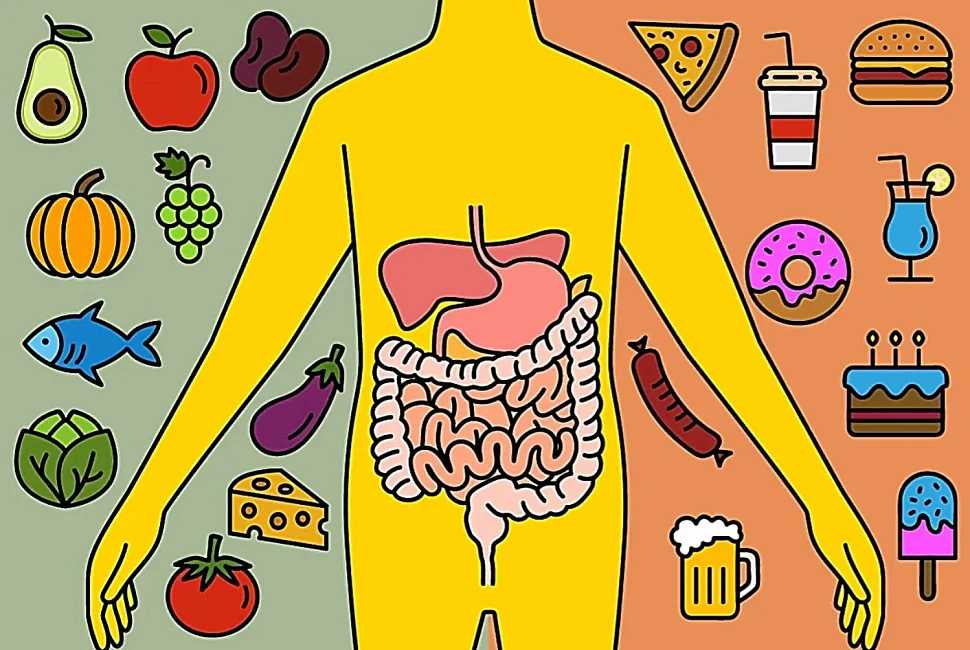
Food is an integral part of our life, giving us pleasure and filling the body with substances necessary for its life. The quality of the food consumed, the calorie content of the diet and the diet have a direct impact on our health, both physical and mental. According to statistics, the state of the human body is about 50% dependent on lifestyle and nutrition, including. Illegibility, excess food, or scarcity of food, over time, lead to rather sad consequences in the form of various diseases.
The importance of good nutrition for health
Virtually all functions of the human body are in one way or another related to nutrition. Food is a source of energy, vitamins, minerals, macro- and micronutrients, and many other essential substances. Improper nutrition negatively affects human health, regardless of age and the initial state of the body. The overeating or insufficient intake of nutrients leads to increased fatigue, reduced efficiency, weakened immunity and even provokes premature aging.
According to University of Washington officials, about 20% of all deaths worldwide are due to malnutrition. The people affected by their diet include people of various means. Some lack nutrients because they eat too little, while others abuse harmful foods. Scientists argue that the main harm to health is excessive consumption of salt, saturated and trans fats, lack of fruits and vegetables, seeds and nuts, omega-3 unsaturated fatty acids and whole grains. But let's consider in the development of which diseases and disorders malnutrition is one of the key factors.

No. 1. Digestive disorders
Food processing and assimilation is highly dependent on the functioning of the organs of the gastrointestinal tract. Improper nutrition primarily affects the condition of this particular system of our body. It can cause a variety of conditions, from gastritis to cirrhosis. Diarrhea, constipation, heaviness in the abdomen, bloating or mild nausea are problems that anyone can face. If these symptoms occur, people should sound the alarm and go to a doctor.
Improper nutrition can increase the risk of chronic constipation. This is due to a lack of dietary fiber and water. To avoid such problems, it is necessary to eat vegetables, fruits, legumes and whole grains all year round, rich not only in fiber, but also in a mass of useful vitamins, minerals, etc.
No. 2. Obesity
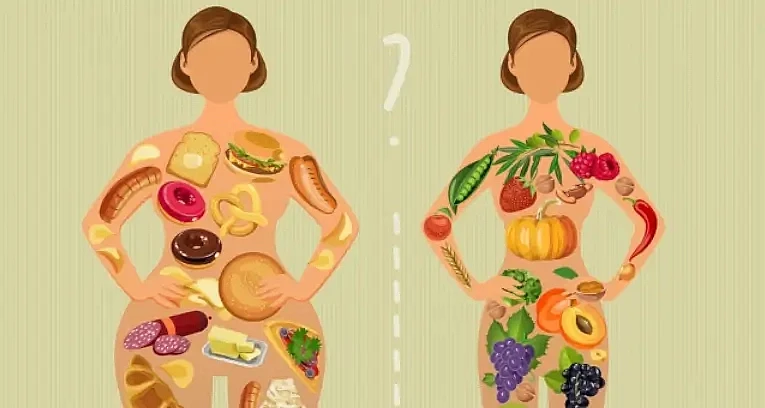
Overweight is a scourge of modern society. Sedentary lifestyles, sedentary jobs, and, of course, inadequate nutrition lead to rapid weight gain. Moreover, obesity can be caused not only by the abuse of fatty and high-carbohydrate foods, but also by the lack of a certain diet. Late, dense dinners and long dietary intervals encourage weight gain by forcing the body to save and store fat.
Obesity itself is a disorder, but it can also trigger other, more serious disorders. Excess weight negatively affects the cardiovascular system, the state of all internal organs compressed by fat, vascular elasticity, blood circulation, hormonal background and many other vital processes.
No. 3. Cardiovascular diseases
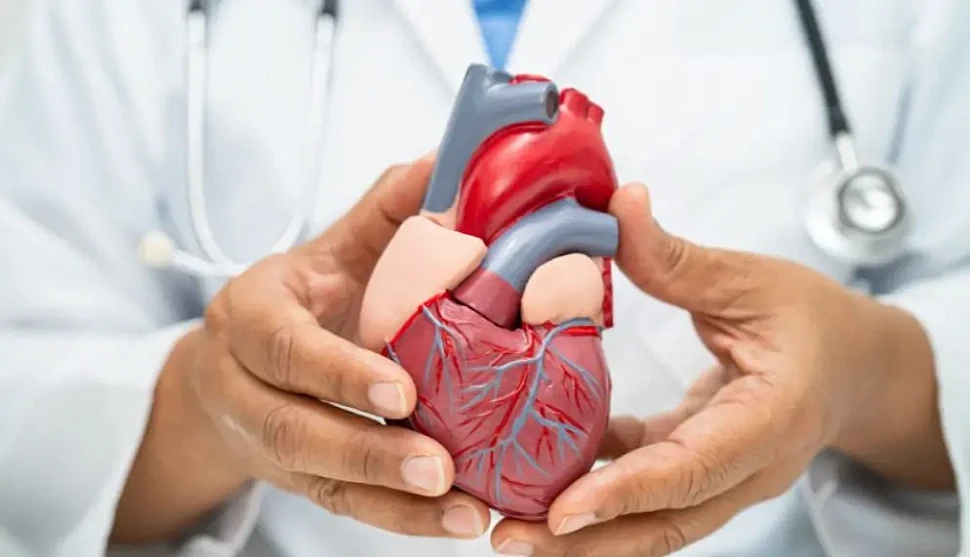
Abuse of foods with a high cholesterol content leads to the formation of so-called plaques on the vessel walls. This increases the risk of heart attacks, strokes, atherosclerosis and a number of other diseases.
Cardiovascular disorders are more likely to develop after late meals. The University of Pennsylvania School of Medicine conducted a study. It was attended by 9 volunteers with normal weight scores. 8 weeks they ate between 8:00 and 19:00. At that time, they had five meals. At the conclusion of the first phase of the study, the participants had a two-week break. During the second stage of the day, they absorbed food at the interval of 12:00-23:00. The participants slept at both stages from 23:00 to 8:00. Not only the weight of the volunteers, but also their metabolism, were subject to observation by specialists. As a result, it turned out that later meals led to weight gain, impaired fat metabolism, and the formation of carbohydrate reserves. Insulin, sugar, cholesterol and triglycerides also increased. All this has a negative impact on the state of the cardiovascular system and increases the risk of developing various diseases.
No. 4. Diabetes
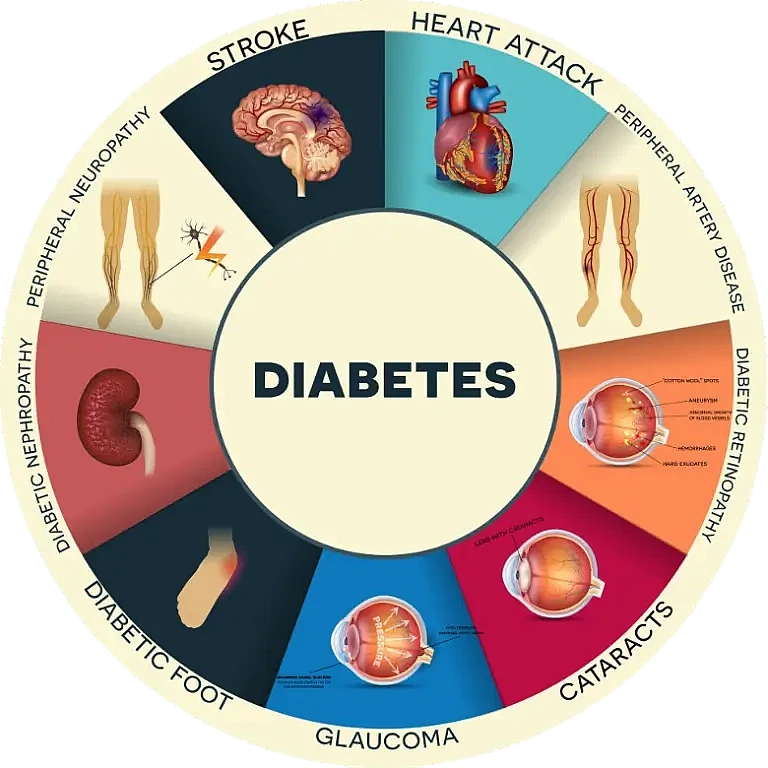
Sugar is part of almost all the foods we eat. It is needed in the body in moderate quantities, because it is a source of energy for it. But not all sugar is good. Confectionery, homemade pastries and even vegetables and fruits can cause blood glucose levels to spike. And the more that happens, the more damage to our health. Malnutrition can thus contribute to diabetes. And it's not just about foods that are rich in simple carbohydrates, it's also about overweight, especially obesity. People with a body mass index higher than 30 constitute the major risk group. To reduce the likelihood of diabetes, people should
Drink more water, preventing even mild dehydration, which interferes with insulin production and glucose absorption
eating less sugar, which increases the load on the pancreas, increases appetite and promotes overeating
take into account the glycaemic index of consumed products when preparing the diet;
moderate consumption of fatty food, preferring lean meat, fish, seafood, vegetable oils;
not to eat large portions and not to make too large intervals between meals;
apply to products with a high content of vitamins C and B.
Following such recommendations, you can not only reduce the likelihood of developing disease, but also normalize your weight.
No. 5. Depression
Scientists at Deakin University have found that the likelihood of depression due to poor nutrition increases significantly. To support this, a study was conducted with the participation of 67 volunteers suffering from moderate to severe depression. All participants were divided into two groups. The first group did not adhere to the principles of proper nutrition, but they were provided with social support by specialists. The participants of the second group sat on a Mediterranean diet with an increased content of non-fat meat, vegetables and fruits. The study showed that the level of depression in volunteers from the second group decreased by 30%, and from the first group - by only 8%. For example, specialists say that to prevent and combat depression, you need to include foods rich in zinc, iron and vitamin B12 in your diet, adhering to general recommendations for proper nutrition.
Lack of a culture of eating increases anxiety, contributes to depression, and contributes to mood disorders. Scientists say that children have these problems, too. In support of their words, they presented an analysis of information obtained from 12 studies involving 83,000 children aged 4.5-18 years. In order to obtain the necessary results, the participants' eating habits, the quality and frequency of their food consumption, behavioral analysis, successes and difficulties encountered by parents were taken into account.
No. 6. Alzheimer's disease
Modern researchers believe that the quality of the products consumed has a direct impact on the work of the brain. For example, high-calorie fast food and other hazards that are popular among the population contribute to the development of Alzheimer's disease. As mentioned earlier, this kind of diet increases blood sugar levels, which in turn increases the likelihood of diabetes, and type 2 diabetes puts the person at risk of Alzheimer's disease.
In addition, American scientists have established that in obesity, dopamine receptors that produce the so-called happiness hormone undergo changes. But besides pleasure, dopamine is also responsible for motivation. Because of this, it is very difficult to bring oneself into sports when you are overweight. It's a vicious circle, and it's not easy to get out of it.
№7.
The causes of cancer are still the subject of much scientific research. And one of the factors that provoke the transformation of benign cells into malignant ones is called improper nutrition. Lack of fiber, a high intake of saturated and trans fats in the diet, and consumption of foods containing various chemical additives all contribute to the overall health of people and contribute to the development of various diseases, including cancer.
According to the European Food Safety Agency, the most dangerous are today’s popular chips and fries, as well as biscuits and coffee. Acrylamide, a dangerous carcinogen, is often found in their composition. It is released when baking or roasting carbohydrate products at high temperatures. Experiments in laboratory mice have demonstrated a link between acrylamide and cancer.
Conclusions
To protect your health through good nutrition, you need to adhere to its principles throughout your life. Of course, because of the sometimes eaten piece of cake or fried cutlets, nothing will happen, but the main thing is not to make such products the basis of their diet. So, the main factors to pay attention to in a healthy diet are:
quality of products and variety of daily menu;
the amount of food consumed and moderation of diet;
a meal regimen of 4 to 5 meals at regular intervals
daily consumption of at least 400 g of fresh vegetables and fruits.
It is a mistake to think that proper nutrition can be very costly. Foreign delicacies and exotic fruits are not needed to provide the body with all the necessary substances. The key is to be healthy and to understand the importance of what we eat.