
Dust Mite Allergy: Symptoms, Causes, and Treatment
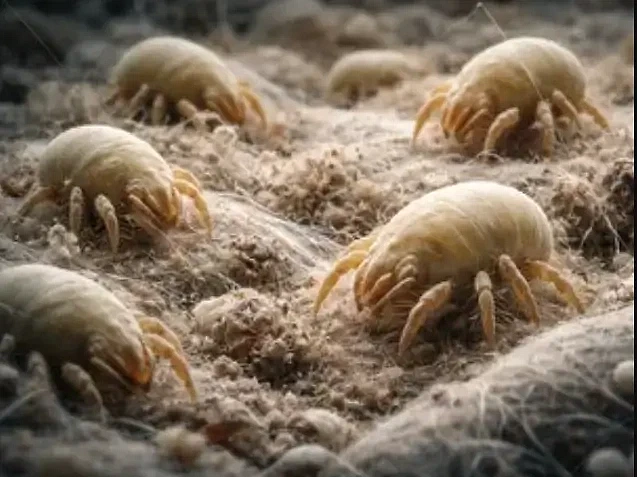
Dust mite allergies are a common problem, but the good news is that they can be successfully managed by understanding the causes and taking action.
Dust mites themselves do not bite or parasitize humans. Proteins in their feces (fecal granules) and chitin skeleton debris present a danger. When these microparticles dry out, they turn into light suspension, mix with the house dust, are easily inhaled, or settle on the skin. The human immune system mistakenly recognizes these proteins as threats and begins to produce specific antibodies (IgE). The next time an allergen is exposed, a reaction occurs that triggers the release of histamine and other inflammatory substances—hence the symptoms.
Among the most significant triggers are cysteine proteases Der p 1 and Der f 1 (which break down the cell-to-cell contacts of the epithelium, facilitating the entry of the allergen), as well as the Der p 2 and Der f 2 proteins (which enhance the activation of innate immunity).
Where they live
Dust mites prefer warm and humid conditions (about 20-25 °C and humidity 70-80%). Therefore, their greatest concentration is observed in places where skin particles accumulate: in mattresses, pillows, blankets, upholstered furniture, carpets, as well as in children's soft toys.
What symptoms are
Manifestations may affect different systems in the body:
On the respiratory tract: nasal congestion, abundant watery runny nose, sneezing attacks, nasal itching, dry cough, throat friction, wheezing, chest tightness, choking attacks. Symptoms often worsen in the morning (after sleep) or during cleaning, when the concentration of allergens in the air increases dramatically.
From the eyes: redness, itching, tearing.
On the skin: itching, redness, swelling, dryness, microcracks, scaling. In people with atopic dermatitis, exposure to tick allergens often triggers a flare-up of the skin process.
General symptoms: Sometimes headache, dizziness, weakness, listlessness, irritability may occur.
Important difference from seasonal allergies (eg, pollen): Allergy symptoms to dust mites are usually year-round.
Why is this happening?
A key risk factor is living permanently in an environment with a high concentration of allergens. The tendency to react in this way can be inherited. Other factors also affect the likelihood of development: allergic comorbidities, exposure to other irritants (tobacco smoke), changes in the human microbiota, and climate and air pollution patterns.
What to do
If you suspect such an allergy, it is best to consult an allergist. A specialist based on history, examination, and symptoms can suggest the diagnosis and, if needed, prescribe tests. These tests may be skin prick tests or a blood test for specific IgE immunoglobulins.

Treatment is usually complex:
Pharmacotherapy for acute symptoms: antihistamines, nasal and eye drops with corticosteroids or mast cell stabilizers, vasoconstricting sprays, inhaled corticosteroids, and bronchodilators.
Allergen-specific immunotherapy (ASIT). This is a technique in which the person is regularly given microdoses of the allergen to which the person is susceptible. Treatment is prolonged (usually 3 to 5 years), but remission can be achieved and the risk of asthma can be reduced.
How to reduce exposure to allergens
The main task is to create conditions in the house that are uncomfortable for ticks, in order to significantly reduce their number. Here’s what you can do:
Weekly wash linens at a temperature of 60 °C.
Use special protective covers on mattresses and pillows.
Replace feather pillows with synthetic ones.
Maintain humidity in the room at a level of about 50-60% and air regularly.
Regularly carry out wet cleaning.
If possible, remove or regularly process carpets and thick curtains.
Soft toys, pillows and blankets should be washed regularly in hot water.
Important nuances
Cross allergy. Some dust mite proteins are similar in structure to those of some crustaceans (eg, shrimp). Cross-reactions are possible because of this, but this does not mean that seafood should be automatically excluded from the diet.
In children, hypersensitivity to dust allergens develops more rapidly at an early age.
1. Rewired RNAi-mediated genome surveillance in house dust mites
2. Acaricidal activities of some essential oils and their monoterpenoidal constituents against house dust mite, Dermatophagoides pteronyssinus (Acari: Pyroglyphidae)
3. Mint essential oil: A natural and effective agent for controlling house dust mites
4. Effect of a commercial air ionizer on dust mites Dermatophagoides pteronyssinus and Dermatophagoides farinae (Acari: Pyroglyphidae) in the laboratory
5. Acaricidal effects of herb essential oils against Dermatophagoides farinae and D. pteronyssinus (Acari: Pyroglyphidae) and qualitative analysis of a herb Mentha pulegium (pennyroyal)