
Fear of Clowns (Coulrophobia): Causes, Symptoms, and Treatment
Phobia is an irrational fear that may be related to psychological trauma, genetic memory, or adverse childhood experiences.
People with increased anxiety are prone to various phobias. The object’s appearance and behavior often give rise to bizarre intrusive fears. Many are successfully treated with psychotherapy.
Causes of phobias
There is hardly a person who is not afraid of anything in life. In childhood, people are afraid of fictional beings, the dark, or aggressive peers. In adolescence - loneliness, in adulthood - loss of work or disability. In today’s world, news stories from television screens or newspaper pages are filled with reports of terrorist acts, plane crashes, and the development of fears and phobias.
Some phobias are shaped in childhood by parental anxiety or poor experience with a particular object, such as being frightened or bitten by a dog, and some parents have been fearful of air travel all their lives. Failure to speak in public can cause a person to develop a phobia. Some of the intrusive fears are not about a specific event, but about genetic memory or a lack of information about the object.
Phobia differs from fear in its irrationality. Fear can be ad hoc and not intrusive. Phobia also manifests itself in the absence of proximity to the situation or object that caused its development. Gradually, the person begins to avoid places where the object of his or her intrusive fear may or may not appear, and the logic arguments usually do not work.
In many cases, fears and phobias prevent people from enjoying life and comprehending its diversity. People treat this with confusion and disbelief, as a result of which he himself begins to feel his own inferiority. Some of the intrusive fears may seem absurd, but there are nonetheless people to whom they cause a great deal of inconvenience and suffering. Such fears include, for example, colarophobia, a fear of clowns.
Why are some fears and phobias related to clowns?
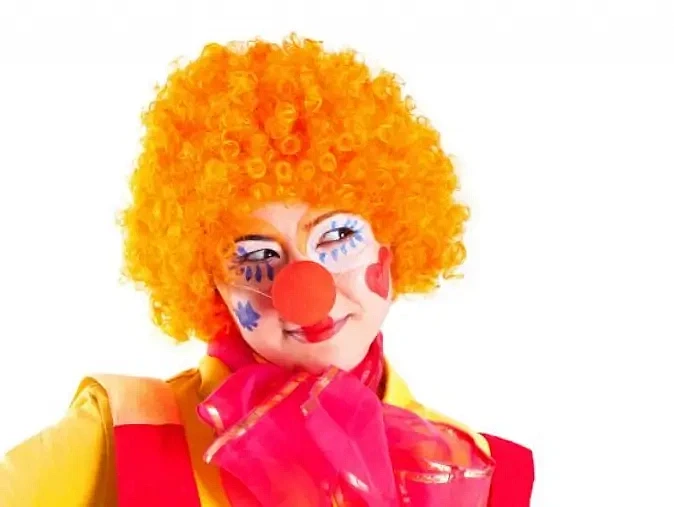
As a rule, clowns cause people to associate with circus art, laughter, and therefore should not inspire fear. But a painted or distorted face can not only make people laugh, but also scare some children. The archetype of the "evil clown" or killer clown is common in popular culture, mostly in U.S. films or comics. Fears and phobias associated with clowns are caused by their frightening appearance and disproportionate body structure.
One of the first fictional works in which a clown appears as a killer is Stephen King's novel It, which was filmed in 1990. People see that under a clown's smiling mask, any intentions can be hidden. In addition, the image of a clown can be used by criminals in the commission of illegal acts. The specific appearance of the clown causes many associations with mental illness, and therefore makes a repulsive impression.
Another reason for the fear of communicating with clowns is the fear of being mocked. Often, an anxious child can take innocent jokes and parodies at his own expense and becomes afraid of clowns. Over time, this also leads to fear of public speaking. Coulrophobia can also be attributed to watching a horror movie in which a clown was featured as a murderer.
In some cases, the fear of incomprehensible beings passes on its own, without any intervention from child psychologists. Sometimes the child is helped by repeated communication with clowns, after which the fear no longer returns. But when intrusive or concomitant fear develops as adults, a psychotherapist may be needed.

Ways to get rid of the fear of clowns - communication, hypnosis and others
Any intrusive fear causes a person to experience a number of unpleasant symptoms - a rapid heart rate, increased sweating, high blood pressure, an inability to respond adequately to what is happening. The same may be true of colurophobia. If meeting or interacting with a clown causes a person to experience physical discomfort, then they need to consult a specialist.
Generally, coping with the intrusive fear does not require medical treatment or admission to a clinic, unless it develops into a serious mental disorder or illness. But it can poison the patient's life and cause other diseases, such as heart attacks or strokes.
In many cases, psychotherapy sessions are helpful in treating colurophobia. As with other obsessive fears, the patient is encouraged to view photos of the clowns and then directly contact them. Children's shows with kind clowns or circus performances are also offered.
At first glance, colarophobia may seem absurd, but its origins are well founded. In ancient times, the official position of society towards actors and buffoons was extremely negative. Moreover, their work was condemned by representatives of the church, which has a significant influence on the psychology of people. Therefore, the mask worn by the clown aroused suspicion and mistrust. Unnatural grimaces and gait can lead to thoughts about the mental health of the character. Moreover, the sight of many clown toys can really scare a child.
Any inexplicable fear is, in fact, easy to explain. Many of these are hidden deep in the subconscious because they are associated with a high level of danger in ancestral beliefs, such as fear of the dark or spiders. Today, images used in popular culture, mostly films or TV series, are added to fears of ancient nature. A person who is obsessed with fear of a particular object or phenomenon deserves not condemnation, but real help, thanks to which he can feel the diversity of the world around him and stop seeing his objects as a source of potential danger.

1. Fear of clowns: An investigation into the aetiology of coulrophobia
2. Hospital clowning: a paediatrician’s view
3. Butterflies, Dwarves, and Plastic Lollypops: A Case Report on Medical Clowning in a Children’s Rehabilitation Hospital