
Fear of Enclosed Spaces (Claustrophobia): Causes, Symptoms

Any phobia differs from situational fear in that it has no rational basis for its occurrence. Fear can make people take strong actions and precautions, and phobia is intrusive. Often it occurs as a result of a traumatic event that leaves a long mark in the person's psyche. Intrusive fear can haunt him for years and negatively affect his quality of life.
Causes of phobias
Heightened anxiety is one of the most serious problems of modern man. When combined with a traumatic event from childhood or adolescence, it can lead to phobias. Many of them seem unusual, strange and bizarre, such as fear of clouds or fantasy creatures with a strange appearance.
Many phobias can be inherited from parents. A child raised in an atmosphere of heightened anxiety may inherit an obsessive fear. In addition, phobias may be caused by ancestral memory. Such fears and phobias include fear of the dark or of spiders.
Some fears and phobias arise during childhood. For example, if a child is attacked or bitten by a dog, even the most friendly dogs can cause panic and a lack of desire to contact them. And a child who was placed in a dark closed room as a punishment can get several intrusive fears at once - fear of the dark and claustrophobia - fear of a closed space.
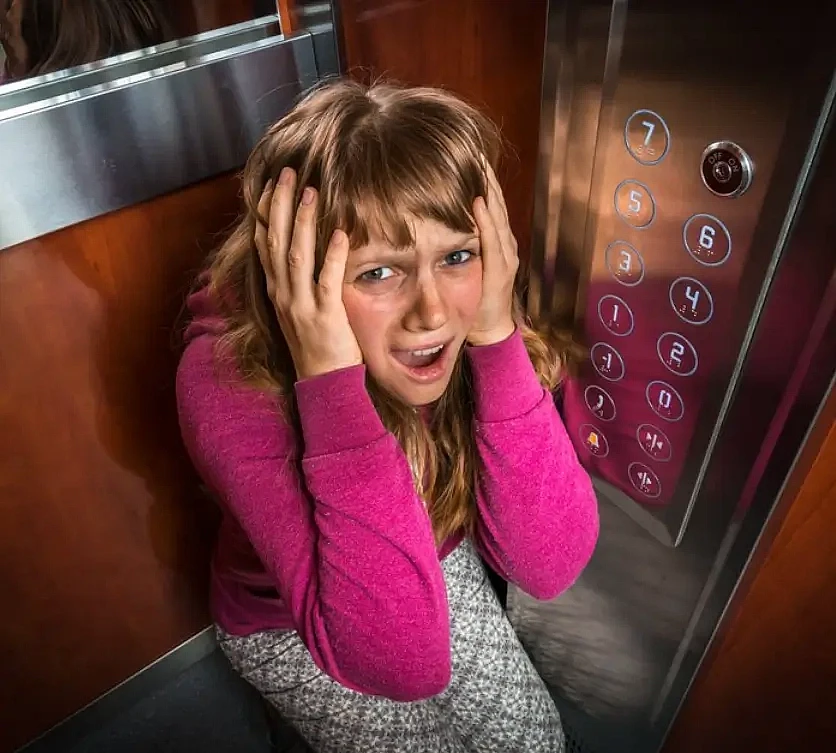
Claustrophobia is a common fear and phobia
Claustrophobia can include being afraid to ride in an elevator, sunbathe in a solarium, or stay in any enclosed area. The reasons why some fears and phobias develop may not be fully understood even by mental health professionals. Such intrusive fears include claustrophobia.
Traumatic flashbacks associated with fire, locking in a dark closet as punishment, or getting stuck in a broken elevator are considered to be one of the probable causes of intrusive fear of closed spaces. Intrusive fears can be transmitted from parents to children, who will view certain objects as high-risk. Other probable causes of claustrophobia include falling into a pit or body of water and being unable to escape for a long time.
Among the main symptoms of claustrophobia are the fear of suffocation and lack of oxygen caused by being forced to stay in a confined space. Symptoms that are common to other obsessions include high blood pressure, sweating, palpitations, and dizziness. Occasionally, nausea or chest pain may occur. The fear of oxygen is exacerbated by the space being too small. Claustrophobic attacks therefore occur in elevators, solariums, or small rooms.
Like any other obsessive fear, claustrophobia causes a person to avoid the object causing the panic. For example, if forced to stay in a confined room, he will look for a way out or experience strong anxiety. Claustrophobia also causes people to feel uncomfortable when stuck behind the wheel or while standing in line.
Claustrophobia can be treated with cognitive-behavioral or drug therapy. The longer the patient suffers from the intrusive fear of confined spaces, the more complex the set of measures. In some cases, even drugs may be given for panic attacks.

How can psychotherapy help to treat claustrophobia?
Any mental disorder can involve a host of problems related to childhood injuries or stressful situations at a young age, in addition to obsessive fear itself. Modern psychotherapy uses a number of methods to help the patient improve his condition and completely get rid of the intrusive fear.
Techniques such as hypnosis or relaxation are used to treat claustrophobia. During the hypnosis session, the patient is submerged in deep sleep, which allows you to identify the cause of the intrusive fear and instill information that will completely get rid of it. In addition, the patient is taught special relaxation techniques to relieve panic attacks.
Modern psychotherapy widely uses the method of immersion in a traumatic situation in order to completely relieve the patient from the intrusive fear. For this purpose, simulators are used to simulate a closed space for claustrophobes or the cabin of an aircraft for those who are afraid of air travel. The patient can survive not only frightening moments, but also relax as much as possible, which in the future will allow him to get rid of his fear.
Any intrusive fear can significantly limit a person's ability to do so. He makes him feel uncomfortable when dealing with other people who are not subject to fear and thus appear to be healthier and leading a full life. A person afraid of air travel will refuse to travel or business trips to those cities and countries where you can fly only by plane. People who have been claustrophobic for a long time cannot enjoy the many civilizational advances that make life comfortable and convenient. They avoid elevators, cars, subway rides, or going to the sauna.
It is not always possible to cure obsessive fear through willpower or self-suggestion. It is unacceptable for a patient's immediate family, friends or colleagues to condemn the patient for "weakness" or cowardice. Many of these intrusive fears are rooted in a person's genetic memory or long-forgotten, at first glance, feelings of childhood. It is therefore unfair to consider them as manifestations of weakness or infantilism.
Psychotherapeutic treatment has long been recognized as one of the best and effective ways to improve a person's quality of life. Mental health requires as much attention as physical health, so intrusive fears must be treated by specialists.