
Giardia Infection in Adults: Symptoms and Treatment

The causative agent is a single microscopic organism called a giardia. The parasite is highly virulent and contagious, with experts estimating that between 10 and 20% of the world's population is infected with giardia. The article tells how giardiasis develops in adults, about the symptoms and treatment of this disease.
Pathogen and pathways of infection
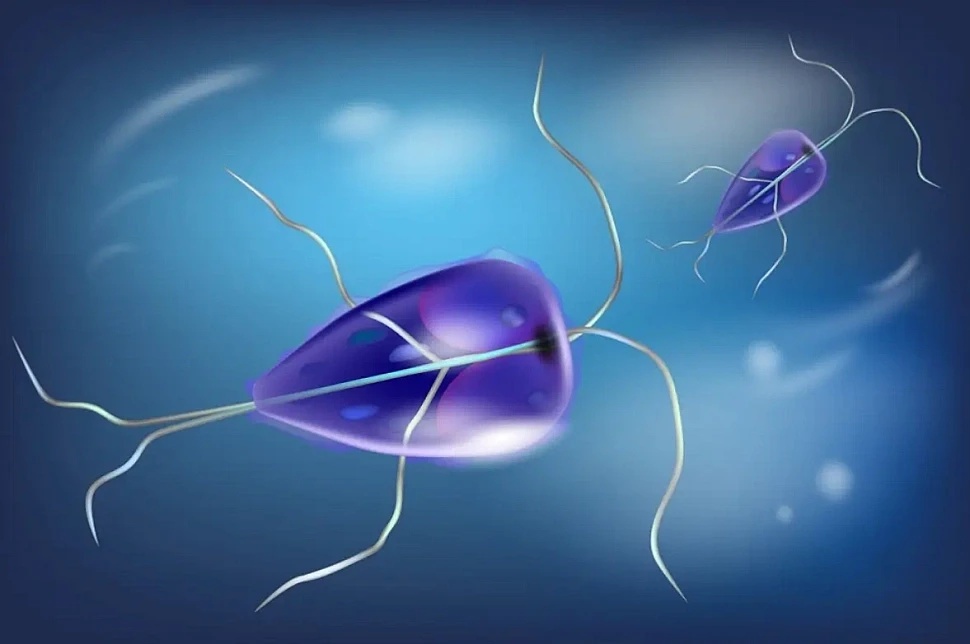
Giardia (Giardia duodenalis or Lamblia intestinalis) exists in two fundamentally different forms. The active form (trophozoite) lives in the lumen of the person's small intestine. It is here that the pathogen feeds and multiplies without penetrating deep into the tissues. The cyst forms under unfavorable conditions in the lower intestine. It is excreted from the host along with feces and, if ingested by another host, can cause disease.
Giardiasis is transmitted by the fecal-oral route. Most often, this happens in several ways.
Through the water. When the cysts of giardia are deposited in wastewater bodies, they can persist in the freshwater of rivers, lakes, and ponds for up to several months. Infection can occur when people consume unboiled water from springs, wells, and keys or even when they swallow water while bathing.
Close communication and poor hygiene (contact and household routes). Cysts from the unwashed hands of an infected person fall on household items: door handles, dishes, furniture, toys, towels. From there, they are easily transferred into the mouth of a healthy person.
With food.
Infection is acquired by eating uncooked foods contaminated with cysts. Fresh vegetables, fruits, herbs and berries, which could have been watered or washed with contaminated water, are the primary sources.
Thus, getting giardiasis does not require close contact with someone who is ill. Swallow only a few dozen cysts that may end up on the surface of an unwashed apple or touch the handle of a public toilet door.
What happens in the body after infection?
Once inside the body, Giardia cysts quietly bypass the aggressive environment of the stomach and reach the small intestine. Here, digestive juices dissolve the cyst's protective membrane, releasing two active trophozoites. They use special suction cups attached to the mucous membrane and lead to:
- reducing the absorbing surface of the intestine, which causes nutrients to be lost;
- damage to the mucous membrane with the development of inflammation;
- violation of the barrier function of the intestines;
- Lactase enzyme deficiency and milk intolerance.
- Together, these factors cause signs of giardiasis in adults, the symptoms of which can vary depending on the amount of intestinal damage.
Symptoms of Giardiasis in Adults
The giardiasis clinic does not have any unique symptoms unique to it. The course of the disease may be an asymptomatic carrier state, in which the person feels completely healthy, but at the same time emits cysts and poses a danger to others. Although there are also manifestations with pronounced intestinal manifestations. The period from infection to the onset of symptoms (incubation period) in adults is typically one to four weeks.
The acute form is more common among people who have had the infection for the first time or among children. It appears suddenly and usually lasts five to seven days.

The symptoms of acute enteritis (inflammation of the small intestine) come to the fore: the stool becomes frequent, up to six to ten times a day, abundant, liquid and foamy. It has a foul-smelling odor and a yellowish or greenish color with a fatty sheen that is associated with impaired fat absorption. Diarrhea is accompanied by abdominal distention, growling, and mild pain in the upper abdomen, epigastric area, and around the umbilicus.
Symptoms of giardiasis in adult women may be similar to those of premenstrual syndrome, so the disorder does not cause anxiety. Patients may also complain of nausea, decreased or complete lack of appetite, weakness, fatigue, and decreased ability to work.
Chronic form.
If the acute stage is not diagnosed and treated, the disease can become chronic. Chronic giardiasis is characterized by periods of calm with intermittent flare-ups: diarrhea becomes less frequent, may alternate with constipation. Abdominal pain and distention become almost permanent companions. Symptoms of chronic intoxication and nutritional deficiencies: weakness, irritability, headaches, sleep disorders, weight loss, dry and peeling skin, mouthwashes in the corners of the mouth come to the fore.
Giardiasis or IBS? Diagnostics
The diversity and nonspecificity of features of giardiasis in adults often lead to its being confused with irritable bowel syndrome (IBS), chronic pancreatitis, or other GI diseases. In giardiasis, the symptoms in adult men and women are not distinctive, and the diagnosis cannot be made on the basis of clinical picture. Laboratory confirmation is therefore key to establishing a correct diagnosis.
Microscopic examination of stool is the main method of diagnosis aimed at direct detection of the parasite. However, cysts are not shed continuously but are expressed in waves, so testing should be done 2 to 3 days apart.

The immunochromatographic test (express method) can detect in the stool a specific antigen (protein) of GSA-65, which is isolated by giardia. It can detect giardiasis rapidly in adults, and clinical guidelines confirm this. However, it is required that a positive result be always confirmed by microscopy, as false-positive reactions are possible.
The serologic test (ELISA) does not determine the parasite itself, but rather the immune system’s response to it, that is, it detects antibodies (immunoglobulins of the classes IgM, IgA, IgG) to giardia antigens. It is important to understand that serological analysis is an indirect method, so it cannot serve as a basis for making a final diagnosis or prescribing treatment.
Only the detection of cysts or trophozoites under a microscope gives a doctor an irrefutable reason to start a specific therapy.
How is giardiasis treated?
Therapy is carried out only after laboratory confirmation of the diagnosis and is of a complex nature, including not only the destruction of the parasite, but also the correction of the resulting disorders.
Antiparasitic (etiotropic) therapy. Several groups of antiparasitic drugs are used to eradicate (destroy) giardia. They have many side effects, so only a doctor can treat giardiasis in adults and children. The treatment regimen is usually selected depending on comorbidities and the disease. The efficiency of therapy is assessed five to six days after its completion using a three-fold microscopic examination of stool.
Symptomatic therapy. To understand how to treat giardiasis in adults, it is important to identify what disorders the parasite has caused. If dysbiosis develops, probiotics and yeast-based drugs are given. It has been proved that some probiotic cultures not only help to restore the microflora, but also have a direct antiparasitic effect, enhancing the effect of basic therapy. If symptoms of biliary dyskinesia are present, biliary drugs and hepatoprotectors may be recommended. To correct vitamin deficiency, vitamin-mineral complexes are used.
Diet and recovery.
When treating giardiasis in adults and children, it is important to take a special approach to nutrition. The main purpose of the diet is to create conditions in the intestine that are unfavorable for the reproduction of parasites, and to normalize digestion.
The treatment regimen for acute and antiparasitic giardiasis involves limiting the intake of simple carbohydrates, which are the main food for giardia. Sweets, confectionery, sweet pastries, carbonated drinks and honey are strictly prohibited. Excluding whole milk temporarily is also recommended because it can worsen giardiasis symptoms. Instead, the diet should be based on:

cereals cooked on water;
low-fat varieties of meat and fish in boiled, stewed or baked form;
baked apples, pears, as well as vegetables in a heat-treated form;
sour milk products.
After completing the course of therapy and confirming the absence of the parasite in the intestine, it is important to continue to follow a gentle diet for several weeks. This is necessary for complete healing of the mucous membrane and restoration of enzyme production. Adherence to dietary recommendations not only speeds up the process of recovery, but also significantly improves the quality of life of the patient during the period of illness.
What should I do to avoid getting sick?
Because there is no specific vaccine for giardiasis, strict hygiene and sanitation are considered the only effective measure for the prevention of giardiasis:
drink only boiled or bottled water;
wash your hands with soap and water after using the toilet and before eating;
wash vegetables and fruits thoroughly with running water;
do not swallow water when bathing in ponds;
Keep the house clean: wash door handles, toys and surfaces regularly;
teach children not to put their fingers or toys in their mouths.
Taking these precautions can significantly reduce the risk of contracting giardiasis and protect yourself and your family from this unpleasant disease.
Giardiasis remains one of the most common parasitic infections in the world, and its cunning lies in its ability to disguise itself as other diseases. The symptoms and treatment of giardiasis in adult women are of particular concern because the clinical presentation may resemble those of gynecologic problems or premenstrual syndrome. Remember that the correct diagnosis and adequate treatment can be prescribed only by a doctor - drugs to treat giardiasis have side effects, and self-treatment can lead to the transition of the disease to a chronic form. Be conscious of hygiene and the quality of food and water to protect yourself not only from giardiasis, but also from many other intestinal infections.
1. Comparative efficacy of drugs for treating giardiasis: a systematic update of the literature and network meta-analysis of randomized clinical trials
2. Under-notification of giardiasis in Auckland, New Zealand: a capture-recapture estimation.
3. Autochthonous and imported giardiasis cases: An analysis of two decades of national surveillance data, Germany, 2002 to 2021
4. Antibodies to cysts of Giardia lamblia in primary giardiasis and in the absence of giardiasis.
5. Giardiasis Diagnosis and Treatment Practices Among Commercially Insured Persons in the United States
6. Albendazole versus metronidazole treatment of adult giardiasis: An open randomized clinical study