
Hormonal Imbalance and Fatigue: Signs, Causes, and Treatment

The number of people who have lost their motivation has been increasing in recent years. It was as if the charge of their energy had become close to zero, and the very idea of business was intolerable. Of course, this is due to the fast rhythm of life, stress and the gray routine of everyday life. But some people cope with the condition almost playfully, while others barely keep the pace.
However, sluggishness and fragility persist even after a good rest and last for weeks, if not months. An endocrinologist tells you what disorders in the endocrine glands are accompanied by increased fatigue.
Fatigue physiological and pathological
Fatigue refers to a sensation of physical or mental exhaustion that occurs after prolonged or intense activity. Then there is a decrease in working capacity, a deterioration in attention, slow reactions. There is a desire to rest. This is physiological fatigue. This is a normal response by the body to a load, saying that resources are temporarily exhausted and that a break is needed. The condition is usually brief and resolves after rest.
But when a person feels a persistent feeling of exhaustion, which persists for a long time and does not depend on the volume of the previous load, it is pathological fatigue. Here, the usual methods of recuperation do not help, and the working capacity is severely reduced. Through fatigue, the body reports that it is time to pay attention to it.
There are many reasons for this, ranging from a shortage of essential micro- and macronutrients from outside to serious disturbances in the body. Sometimes in case of fatigue, it is enough to replace the deficiency of protein, iron, magnesium or vitamins (B, D, C groups).
Chronic sluggish infections also take resources away from the body. But also to deprive a person of cheerfulness and to hide under the mask of fatigue can and disturb the balance of hormones (failure). In such cases, maintaining good sleep, rest, and eating habits is particularly important. But the key to good health will be to normalize hormone levels.

What is hormonal failure?
Hormone malfunction refers to when levels of one or more hormones are abnormal (increased or decreased) or when the natural rhythm of their secretion is disturbed. Hormones regulate almost all processes in the body.
- metabolism;
- work of internal bodies;
- emotional state;
- reproductive function;
- water-salt exchange, etc.
- Internal changes associated with changes in hormonal background, greatly change the habitual way of life. The symptoms
- of fatigue are varied: it is intertwined with a rapidly changing mood, and the slightest reason takes you out of balance.
- This condition exhausts both the person and people around him.
Malfunction may occur in the centers of regulation (hypothalamus, pituitary) as well as at the level of peripheral glands. Consider the common syndromes behind fatigue.
Thyroid fails
Fatigue can be bothersome in people with both hypothyroidism and hyperthyroidism.
In hypothyroidism, the thyroid gland produces too few hormones. The body is going to a economical mode:
metabolism slows, cells get less energy, and tissues get less oxygen;
Disturb edema, which weighs down the body and prevents movement;
anemia often develops, the body is even more difficult to provide oxygen;
general weakness is on the rise;
from the outside, people seem inhibited, depressed, anxious, although there are also mood swings.
It is as if the fire is going out inside the person: the energy is less and less, it is not enough to perform simple tasks. The body insistently asks to slow down, and it becomes almost impossible to keep the thought and focus on the important things - attention, concentration and memory are as if shrouded in a thick fog. All of this adds up to a very persistent sense of weariness, where even simple things take too much energy.

In hyperthyroidism, the thyroid gland produces too many hormones, so the body works harder.
- accelerates metabolism;
- heartbeat is increasing;
- muscles consume energy faster, shaking in the hands;
- a person loses weight even with a good appetite and constantly feels heat;
- From the outside, the person looks too excited, with sharp mood swings;
- cortisol decay is accelerated, which can lead to problems with the adrenal glands.
- The body burns stocks faster than it can replenish. Behind the feverish bustle lurks a deep fatigue. As a result, despite
- external activity, the body and its reserves are rapidly depleted, hence the feeling of lack of strength. The human body has
- been asking for respite for a long time, but cannot afford it because of a hormonal riot.
What about the pancreas?
Fatigue is closely related to carbohydrate metabolism disorders. If cells respond less well to insulin, which is produced by the pancreas, or not enough, glucose cannot make its way into cells and serve as an energy source. Hyperglycemia develops in the blood, resulting in decreased energy and rapid fatigue. Lack of control can lead to the accumulation of ketones, which can lead to a life-threatening complication called diabetic ketoacidosis.
On the other hand, extreme fatigue, drowsiness combined with trembling, sweating, or dizziness may reflect a low blood sugar level called hypoglycemia. In this case, the brain and tissues are literally devoid of fuel for optimal performance. It is urgent to raise blood sugar levels by eating, for example, something sweet.
If the Genitals Do Not Work Well
The genitals in our bodies are important factories for the production of cells for the continuation of the genus. In men, the testes produce sperm, and in women, the ovaries produce eggs. They also release specific hormones into the blood that tell the body how to work.
Underneath the face of fatigue, there is often a disturbance in the level of sex hormones in the blood. Here in men it is worth noting the role of testosterone. He is responsible for energy level, physical strength and initiative. Decreased testosterone causes the following changes in the body:
there is a rapid fatigue, reduced working capacity, even simple tasks may seem impossible;
Loss of sex drive and interest
irritability, mood swings, men are more depressed and prone to depression;
Stamina and muscle strength decrease, men tire faster, doing the usual things;
Body fat accumulates in the abdomen
the skin becomes drier, hair growth on the face and body decreases;
sleep quality is affected, and sleep is shallow and inadequate.
The body recovers less well at night, which increases fatigue during the day. And fat deposits, deteriorating skin quality and libido problems are additional touches for constant irritation. One day, a patient compared himself to a car on which a battery was starting to land. If it used to feel like a powerful SUV, then when problems arose, it began to look like an old pickup truck that barely reaches the refueling. It seems to be coming, but without the former confidence, any maneuver requires a huge effort.
In women, estrogen and progesterone affect energy balance and sleep. Estrogen deficiency may cause low levels of serotonin, a hormone associated with mood and feelings of gratification. They are also concerned:
persistent energy loss, mood swings;
Insomnia and anxiety, leading to fatigue
night tides and sweats, frequent awakenings;
deterioration of the quality of the skin - thinning, dryness, tightening, pigment spots;
reduction of sex drive;
violation of the menstrual cycle;
Exhausting headaches because vessel walls become fragile and tone becomes unstable
These findings sequester resources and worsen weakness. Most often, menstrual irregularities become a reason for seeking a doctor, and abrupt changes in mood and constant irritability have become firmly embedded in everyday life, markedly worsening its quality. Women with no previous headache problems are at a loss because of a sudden migraine and bypass doctors, and sometimes the key to the solution lies in stabilizing estrogen and eliminating its abrupt drops.
Parathyroid gland: problems with calcium
Small endocrine glands are located on the posterior surface of the thyroid gland. We can say that these are "controllers" of calcium that monitor the stability of its level in the blood. Bone health, muscle contraction, and nerve balance depend on calcium. And even without it, the process of blood coagulation and the transmission of signals between cells is disrupted. It's the parathyroid parathyroid hormone that's produced by the parathyroid glands.
Persistent fatigue may occur with hyperparathyroidism and hypoparathyroidism as a symptom of a hormone disorder. In the first case, the result is an excess of calcium in the blood, which causes:
muscle dysfunction and nerve impulses transmission - muscles fatigue faster;
decreased sleep, apathy, decreased concentration - it is not possible to fully regain strength;
active washout of calcium from bones, resulting in decreased bone density, leading to osteoporosis, exhausting pain in the back, pelvis, or legs.
By the way, excess calcium in the blood associated with parathyroid dysfunction, the third most common endocrine problem. Only diabetes and thyroid abnormalities are more common.
In the second case, in hypoparathyroidism, the calcium level in the blood drops. Painful cramps and cramps, as well as memory problems, result in a chronic lack of strength and general weakness. Almost half of the cases are associated with damage to the parathyroid glands during neck surgery.
In chronic kidney disease, phosphorus-calcium metabolism suffers in advanced stages, resulting in hyperparathyroidism, in this case secondary. That is, the level of parathyroid hormone will be increased (hence the name), but the calcium in the blood will be low. To compensate, the body will actively extract calcium from the bones. Fatigue in this situation will be associated with pain, weakness of the muscles and the forced restriction of mobility.

Adrenal gland level
Severe fatigue is also a concern with hypocorticism. The adrenal glands do not produce enough hormones, particularly cortisol. It is involved in metabolism and helps maintain blood sugar levels and energy for cells. If there is not enough, the body seems to lose access to its fuel reserves. Energy is scarce for just about anything. Arising:
severe and constant fatigue, even to the point of adynamia, when even simple movements are difficult;
dizziness during low pressure;
muscle cramps due to lack of aldosterone, which is responsible for the water-salt balance;
loss of appetite, weight begins to decrease;
digestive problems;
difficulty concentrating, memory problems, apathy, depression.
Primary hypocorticism may be considered if fatigue is combined with darkening of the skin, which may appear bronze or brown. It is most noticeable in the area of folds, friction or scarring on the face, neck or arms.
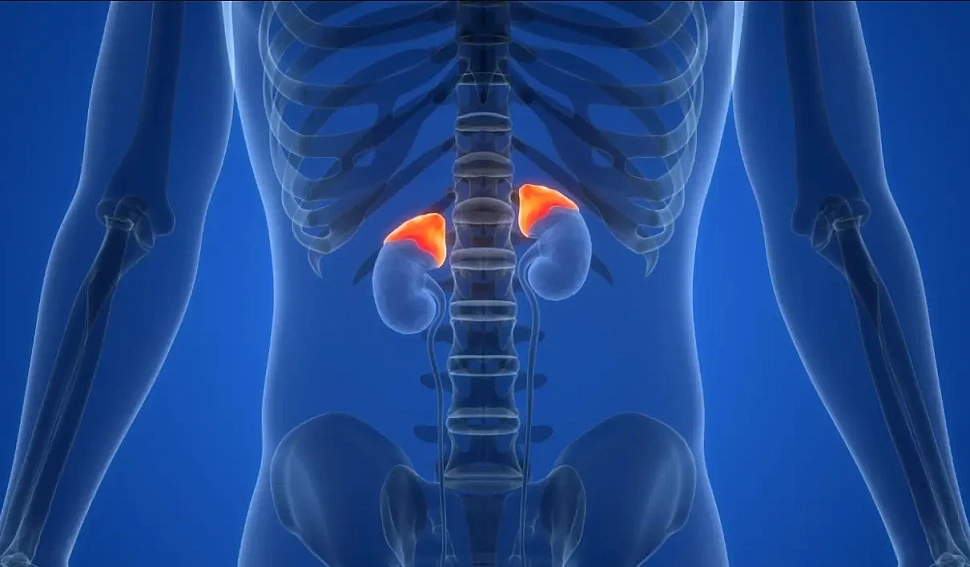
If there is a sudden deficiency of adrenal hormones, it is fraught with the development of addisonic crisis - a life-threatening state with a sharp drop in pressure, severe dehydration, impaired consciousness and a risk of shock. Therefore, in people with persistent, unmotivated fatigue, it is important to contact a doctor in time to ask about the causes.
Circadian rhythm and cortisol
When talking about the deficiency of cortisol, it is impossible not to mention the violation of the rhythm of cortisol secretion [4], which is also accompanied by fatigue. Normally, his level in the morning is higher than in the evening. It is necessary for the body to awaken and be cheerful. Cortisol levels gradually decrease in the evening, and the body prepares for sleep and relaxation. The combined work of cortisol and melatonin, which is produced by the epiphysis, with other elements forms the circadian rhythm - our internal biological clock.
If synchronization is lost, the structure of sleep is disturbed. There is a debilitating drowsiness during the day, despite the sufficient duration of night rest. Quality also suffers: frequent awakenings wear out, and sleep becomes superficial. The body does not have time to recover, which explains the importance of regular and sufficient sleep.
When to go to the doctor?
If you notice one or a couple of symptoms coming in, it's not a reason to panic. However, if the rest and nutrition is observed, and fatigue persists for more than two to three weeks (or increases), you should consult an endocrinologist.
After the history and assessment of the picture as a whole, if necessary, examinations for the level of hormones (TSH, T4sv, cortisol, sex hormones, insulin, glucose, PTH, calcium, glucose), as well as ultrasonography of the thyroid gland, adrenal glands and other studies will be scheduled to exclude other causes. Findings are important to enable the diagnosis to be made correctly and to help people decide appropriate treatment according to their situation. Remember: your health is in your hands!
1. Unveiling the Role of Hormonal Imbalance in Breast Cancer Development: A Comprehensive Review
2. Editorial: Hormonal imbalance-associated oxidative stress and protective benefits of nutritional antioxidants
3. Endocrine disorders and the neurologic manifestations