
How Does Eating Too Much Sugar Affect Your Skin?
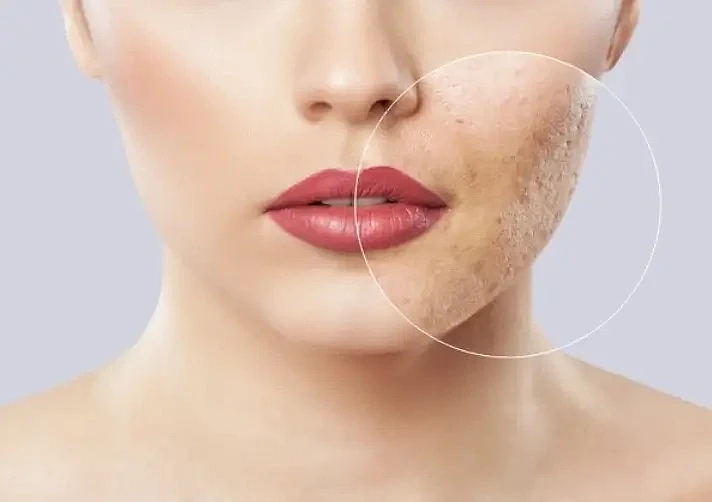
We all want to look young, be physically active and keep a bright mind and good memory as long as possible. Science has already learned many of the obstacles to doing so. One of them is excessive consumption of sweets. Excess sugar in the body affects not only the function of the pancreas, but also the structures that keep the skin young. The term "sugar face" was coined. We understand what it is, how to avoid this problem and what to do if it is already there.
What is a sugar face
Sugar face is a term for an abnormal change in the skin of the face caused by excessive glucose and other sugars. Although it is not official, it can explain the specific skin problems caused by excessive consumption of sweets. A more precise and scientific formulation of this condition is "the increase of glycation products of proteins in the skin of the face".
The main unpleasant feature of this condition is a premature fading. This is due to the destructive effect of sugars on skin proteins, especially collagen and elastin, which provide skin tightening, elasticity and no wrinkles. The fibers become brittle, brittle, and unable to fully perform the tonic function.
Gradually, other structures are also involved. The walls of the capillaries become dilated, shining through the skin, brittle, and easily damaged. The same is true for lymphatic vessels. They stop draining excess fluid completely, resulting in swelling. As a result, healthy, young skin is lost. For this reason, the disease is sometimes referred to as "glycoaging".
What a sugar face looks like
Its features are similar to those of typical age-related skin changes occurring in 30-35 years. They can be manifested differently in each person:
- in the form of dryness of the skin and a mesh of wrinkles;
- rashes, acne from the sweet;
- pigment spots;
- translucent expanded capillaries;
- someone may notice swelling on the face, especially around the eyes, or excessive overhanging loose skin on the upper
- eyelid.
- Symptoms may have different combinations in each person. Thus, subjective judgment is commonly used to determine whether a person looks older than their age.
Four indicators of skin youth
Any form of aging is reduced to basic elements — basic indicators. They must be manifested in the sufferer of the disease. Based on these indicators, a dermatologist or cosmetologist can identify a person with sugar at an early stage, before its effect is fully manifested:
Loss of natural resilience. One of the most noticeable signs of premature aging. If skin elasticity is inferior to normal for its age, it clearly indicates that the symptom is premature.
Wrinkles. On the sugar face, they appear earlier than expected in places where they would not appear until many years later.
Dry skin, which is a consequence of the loss of its natural hydration and protective functions, usually manifested in later life.
Deterioration of the skin texture. The roughness and unevenness of both color and touch become noticeable.
If all four of these features are present, then it is possible to confidently speak about obvious aging of the skin. If it happened earlier than expected, it is very likely that the cause was the action of sugars.
Sugar face test at home
You can check the relationship between skin problems and excess sugar consumption. Refuse the sweet for at least two weeks, or better for a month. If you notice that some of the symptoms are missing or have become significantly less pronounced, then the cause of their appearance was a taste for sweets. In order not to worsen the condition, you need to adjust your diet in favor of healthy products.

How sugar affects the body
Sugar, which includes glucose, fructose and other more complex forms of sugars, is the main source of energy for the human body. When sugar is eaten, complex forms of sugar break down into simple molecules. They can be used by cells in the process of cellular respiration, providing vital functions. When organs function properly and the normal amount of glucose molecules do not cause much damage to tissues. When excess occurs, the body begins to misdistribute them throughout body tissues.
What's the food got to do with it?
The root cause of problems with the distribution of sugars in the body is an incorrect diet. An unbalanced diet can lead to the abuse of simple carbohydrates. This, in turn, causes rapid weight gain. If left unchecked, this trend can lead patients to pre-diabetes and then diabetes.
The further one travels in this negative chain of conditions, the greater the effect of sugar on the skin. Both types of diabetes mellitus are harmful because they prevent glucose from leaving the body. Sugar molecules accumulate in places where their concentration has a devastating effect on the proteins from which our bodies are built. The face is one of the places where the toxic effect of glucose is most noticeable.
How sugar is involved in the breakdown of skin proteins
To understand how sugar affects the skin and why it can destroy it, it is necessary to consider the chemical reaction of proteins and glucose - glycation of protein. Again, the mechanism is most noticeable on the skin of the face.
Glycation is random interactions of glucose with amino acids and nucleic acids without enzymes:
the glucose molecule distorts the structure of the healthy protein molecule and interferes with its natural functions;
the higher the glucose concentration in a particular site, the more molecules interact;
The more glycation reactions occur, the faster sugar destroys collagen, elastin, and other molecules in healthy skin.
under the influence of a large number of reactions, protein molecules are literally covered by the final products of glycation, such as glucosepan, crossline, carboxymethyllysine, etc.;
in this state, they lose the ability to provide the same functionality they originally had.
The modified proteins make the skin stiff, less elastic, and insufficiently moisturized. That is, there is a manifestation of the very same will take premature withering, which usually appear only with age.
How to get rid of sugar face
The most effective treatment is one that eliminates the cause. But in the case of the sugar face, this is not always achievable. For example, diabetes mellitus has been declared incurable to date. Glucation is then called abnormal glucation.
In the case of abnormal glycation, the patient's goal is supportive therapy to maximize the elimination of the symptoms of the mellitus face. Its effectiveness is achieved only by a high level of compensation for the breakdown of proteins. Taking hypoglycemic, antidiabetic drugs will be useful, because they directly affect the biochemistry and concentration of sugars in the body, which helps slow glycation.
In all other cases, high glycation levels are caused by improper lifestyles, bad habits or non-chronic diseases. The good news is that a person suffering from a mellitus face can be completely cured.
Deglycants rush to help
In addition, deglycants have antioxidant properties that help to combat pigmentation as one of the symptoms of skin aging. In the case of abnormal glycation (diabetes and pre-diabetic state), these drugs can reduce oxidative stress, and this leads to an improvement in the state of the body.
Another indirect useful property of deglycating agents is their anti-inflammatory effect. Tissue inflammation (especially chronic) accelerates the glycation process due to increased oxidative stress, activation of cytokine production, and increased enzyme activity. Relieving inflammation eliminates the factors that stimulate deglycation.
And about other drugs
The drugs recommended for the treatment of facial mellitus usually contain rosemary or alpha-lipolyic acid as the main active substance. Alternatives include azelaic acid, metronidazole, metformin hydrochloride, pyridoxine hydrochloride (a type of vitamin B6), and many other organic compounds.
It is often necessary to try drugs with different formulations in order to individually choose the most effective remedy. Preparations are available in different forms: capsules for oral administration, medical creams, ointments and cosmetics for care.
The drug dosage, frequency, and duration of treatment depend on the reason that caused the glycation acceleration. The closer the patient is to the state of abnormal glycation, the more intensive therapy he needs.
Rejuvenating procedures: what can and cannot be done?
When choosing additional procedures for accelerated rejuvenation, it is important to consider that the skin molecules are already weakened and damaged. This means that the process of protein tissue recovery will take place at a slow pace, which can lead to unpleasant complications.
Therefore, people with a mellitus face are advised to avoid aggressive procedures such as exfoliation, dermabrasion, and chemical peels. More delicate techniques aimed at moisturizing the skin, such as hydrating masks, microcurrent therapy, or mild laser peeling, should be preferred. The best choice of procedures will be made by a beautician after a thorough examination.
1. A marker of growth differs between adolescents with high versus low sugar preference
2. Seasonal variation in added sugar or sugar sweetened beverage intake in Alaska native communities: an exploratory study
3. The sugar industry’s efforts to manipulate research on fluoride effectiveness and toxicity: a ninety-year history