
How Often Should You Change Your Pillowcase? The Truth About Demodex Mites
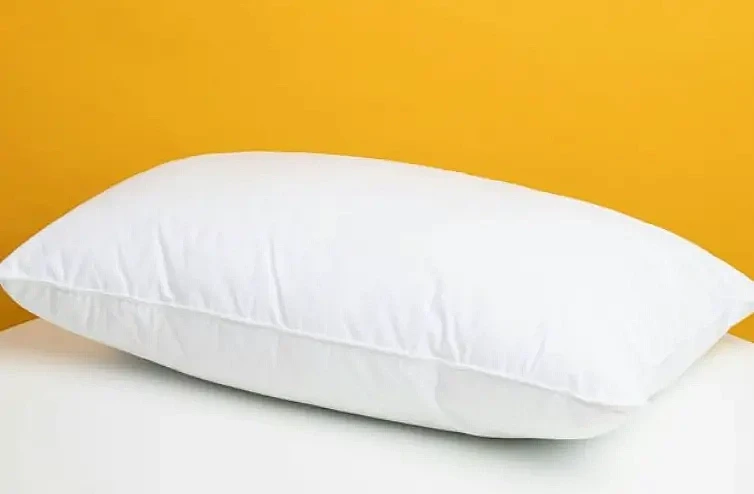
Have you ever noticed how nice it is to go to bed with freshly washed laundry? This crunch, this smell of purity, this feeling that the world is a little better.
And now honestly: how often do you change the pillowcase? Once a week? Twice? "Well, she looks clean," most people think. And here lies the main deception. Because the pillowcase is not just a cloth. It is a bacterial site, a dead cell cemetery and a five-star hotel for dust mites.
According to the American Academy of Dermatology, your face transmits about 50 million dead skin cells to your pillow overnight, a gram of sweat (and up to 10 grams in the heat), and, if you are a woman, a cocktail of tonal cream, carcass and night moisturizing cream. And all of that stays there, in the fibers of the cloth, warm up until the next shift. Now imagine that
this "compote" persists for 7-10 days. Unappetizing? Same thing.
In this article, we will understand why the pillowcase is not just an element of decor, but a full-fledged medical tool. And why two nights is the maximum time you can trust her. Promise: after reading, you will want to wash all the laundry right now. Even if it's 3:00 a.m.
Microcosm under the ear: how sweat and scales create the perfect hell for allergies
Every night, as long as you see the sweet dreams, an invisible orgy occurs on your pillowcase. The sweat glands secrete a mixture of water, salts, urea, and lactic acid. Keratinocytes, the cells of the skin’s upper layer, die and exfoliate in thousands per hour. Add sebum (sebum), which is released even in sleep. The result is a nutrient broth, which microbiologists would call "environment number 1 for the cultivation of microorganisms".
And the main gourmets of this broth are dust mites (Dermatophagoides farinae and Dermatophagoides pteronyssinus). These microscopic arthropods, 0.1-0.3 mm in size, inhabit every home, but cushions and pillowcases are their favorite restaurants. One female lays up to 300 eggs per life, and each individual produces 20 times more feces than it weighs. These feces contain the protein Der p1, which is one of the most potent natural allergens.
A study by Journal of Allergy and Clinical Immunology (2019) showed that in a pillow that has not been changed for 2 years, the concentration of allergens of dust mites can exceed the safe threshold by 10-15 times. And the pillowcase, used 3-4 nights in a row, contains enough protein Der p1 to provoke sneezing, nasal congestion, and even an asthma attack in susceptible people. That is, when you twitch at night and can not breathe - perhaps it is not the runny nose, but your own pillow.
Studies show that prolonged exposure to high doses of the allergen can sensitize the body even in those who have never had symptoms. That is, if you inhale ticks many times, you can get allergies. Do you want such a gift? Not likely.
Face in danger: bacterial pillow as the main enemy of clean skin
Acne is a multifactorial drama involving hormones, stress, and genetics. But there is one factor that you control completely: the cleanliness of the surface with which your face contacts 7-9 hours a day. Imagine you put your face on a dishwashing sponge every day that hasn't changed in a week. It's kind of what life looks like on an old pillowcase.
In an experiment that published washings from old pillowcases (slept 5 nights in a row) showed the growth of more than 15 species of bacteria, including Staphylococcus epidermidis (opportunistic staphylococcus), Propionibacterium acnes (the main culprit in acne) and even Streptococcus in small quantities. When these bacteria enter the skin with the barrier already broken (the pores dilate after sleep, friction microlesions), inflammation begins.
Cosmetics remnants are especially dangerous. When you wash off your makeup overnight, you almost certainly leave microscopic tonal cream or carcass particles in the pores. Then they are rubbed into a pillowcase, mixed with sweat and sebum to form an ideal environment for Malassezia furfur, the fungus that causes folliculitis and seborrheic dermatitis. A clinical study confirmed that patients who changed pillowcases every 2 days had a 34% lower rate of acne exacerbations than those who did so once a week.
Night apnea from the pillow: how ticks steal your breath and sleep
Breathing through the nose in a dream is not just a comfort, it is a physiological norm. The nose moisturizes, warms and cleanses the air. But when you go to bed on a pillowcase that contains dust mites and their feces, the smallest particles go up in the air every time you move and enter the airways. The result is swelling of the nasal mucosa, congestion, snoring, and even episodes of night apnea (respiratory arrest).

A study of 800 adults found that people who changed bed linens less than once a week had a 42% higher risk of snoring and a 55% higher risk of experiencing daytime sleepiness. Moreover, the effect was independent of other factors (allergies, smoking, weight). That is, even in healthy people, the dirty pillowcase disrupted the architecture of sleep, reducing the proportion of deep stages (delta sleep) by an average of 18 minutes per night.
Why is this happening? When the nose is stuffy, you start breathing through your mouth. Oral breathing does not purge dust and reduces the production of nitric oxide (NO) in the sinuses, which dilates the bronchi and improves oxygen saturation. As a result, the saturation level (O2 in the blood) may fall by 3 to 5%, tantamount to mild hypoxia in the brain. Wake up not rested, but with a "cast-iron head"? Perhaps that is the point.
How often and what to wash!
The gold standard adopted by the Academy of Allergy and Clinical Immunology states that pillowcases should be changed every 2-3 days to a maximum. For people with acne, eczema, or asthma, every day And no, turning the pillowcase on the other side is not considered a change - bacteria and mites are already present on both sides (pillow is one).
Now about the laundry. Temperature is a key parameter. Dust mites and their allergenic proteins are not killed at 40°C. They need at least 60° C for 30 minutes. A study by Allergy (2019) showed that washing at 60 °C removes 100% of living ticks and 96-98% of allergens, whereas at 40 °C, washing removes only 45% of ticks and 30% of allergens. If your fabric does not stand 60 °C - add tea tree essential oil (5 drops) or lavender to the air conditioner compartment - they have an acaricidal effect (kill ticks) at 40 °C.
Important advice for allergy sufferers: dry pillowcases in the sun or in a drying machine at high temperature. Ultraviolet and hot air kill residues. And never smooth pillowcases with steam on the front side - steam moisturizes the fabric, and in 2 hours the humidity will return, and with it and the conditions for reproduction. Just iron from the inside out.
Final recommendation: If you think: "Well, I can't change the pillowcase so often, it's a bunch of washes" - just buy 7-10 pairs of cheap pillowcases made of white cotton. Change every day, put in the basket and wash once a week in one batch at 60 °C. White color - because it can withstand high temperatures without molting and discoloration.
1. Bugging Forecast: Unknown, Disliked, Occasionally Intimate. Bed Bugs in Germany Meet Unprepared People
2. Molecular analysis of the blood meals and bacterial communities of bed bugs (Cimex lectularius L.) to assess interactions with alternative hosts
3. Bed Bugs: Clinical Relevance and Control Options