How to eat properly with psoriasis?

Psoriasis is a chronic, noncommunicable disease that can be difficult to treat. Disease can develop at any age, but it most often affects young people. Its main signs are the appearance of rashes, as well as peeling of the skin. Can we influence its development and facilitate its flow?
Symptoms and main manifestations of psoriasis
Flaky lesions of varying size appear on the bends of the limbs, head, or other parts of the body. Therefore, if such symptoms are found, a dermatologist should be consulted promptly.
Psoriasis results from an atypical response of the human body to external stimuli, which leads to overrenewal of the upper layers of the epidermis. In a healthy person, the full cycle of skin regeneration takes about a month, but in this disease it proceeds very rapidly (in less than a week).
Modern medicine classifies this disease as hereditary diseases, which are caused by a complex of causes. The most likely are immune system abnormalities, metabolic disorders, and certain disorders of the nervous and endocrine systems.
Despite the abundance of triggers for psoriasis, it is clear that it is not an infectious disease. Therefore, they cannot be acquired from another person.
There are currently several theories about the occurrence of this disease.
One claim is that psoriasis causes immune system abnormalities that are inherited. That is why the vast majority of cases of the disease occur in persons under the age of 25.
Another theory denies genetic predisposition and links the development of disease to frequent stress, poor living environments and unbalanced diets. Thus, dieting people with psoriasis is a must for relief. It also suggests that the lack of adequate treatment may spread the disease to other organs and systems and cause, for example, damage to the small joints of the fingers and toes.
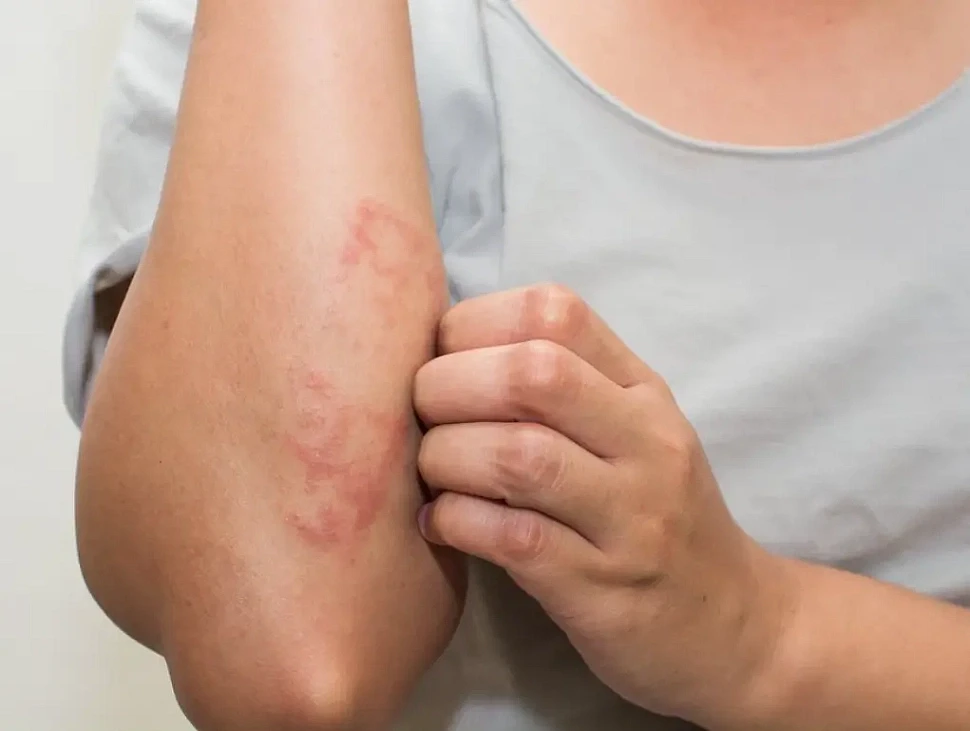
The hallmark of psoriasis is the formation of reddish, flaky, and intensely itchy patches on the body. The size of these spots varies from small dots to palm-sized spots. The skin is most commonly affected at the sites of the physiologic flexures and folds and on the scalp. Sometimes these areas develop cracks and sores.
In about one in four people, the nail platinum is affected. They become brittle, dim, and stain and deepen.
Features of diet in psoriasis
Psoriasis is rather painful. Moreover, the psychological discomfort that accompanies the disease cannot be ignored.
Since medicine has not yet accurately determined the exact mechanisms of the disease, to date no effective remedy has been found for psoriasis. Thus, people may resort to nondrug treatments, such as nutritional adjustments, to relieve the disease.
The diet for psoriasis is developed for each patient individually, according to the severity of the disease. However, there is a list of products that are subject to mandatory prohibition. These include:
- spicy sauces and marinades;
- brightly colored fruits and berries;
- canned food and salts;
- sausage products;
- coffee, chocolate;
- garlic;
- eggs;
- alcohol.
Doctors recommend that people with psoriasis keep a food diary, in which they record the time and type of food they eat. In parallel, all changes that occur to the body should be noted. Such actions identify a list of products that should be removed first.
Also, the diet for psoriasis should meet the following requirements:
inclusion of a sufficient amount of "alkaline" products in the diet (cucumbers, carrots, tomatoes, avocado, watermelon, cabbage, oatmeal, etc.);
reduction of the proportion of products that oxidize (meat, legumes, eggs, yeast dough, sugary carbonated beverages);
compliance with the drinking regime (the lack of fluid in the body can aggravate the course of the disease, so its usual volumes need to be slightly increased);
Limiting fat content (fatty meat should be replaced by more dietary);
organization of unloading days (such measures reduce the impact of possible allergens on the digestive tract).

Nutritional correction and other home remedies for psoriasis
It should be noted that the positive effect of the correction of the diet is achieved only in the case of a mild form of psoriasis. In more severe disease, changes in nutrition contribute only to better absorption of drugs.
The trigger for the development of the disease can be strong experiences, mechanical trauma to the skin, complications after colds, as well as severe allergic reactions.
If people are predisposed to or diagnosed with the disorder, several measures are needed to prevent (or further spread) psoriasis. These include.
Preserving calm and composure
People with this disorder are usually prone to intense distress. Therefore, one of the means of psoriasis is to maintain a stable emotional state. If this task is not possible on your own, you can resort to the use of soft natural sedatives (after agreement with the attending physician).
The right choice of clothes
Wearing synthetic fabrics should be avoided. Prefer light-colored cotton and linen items (they contain fewer dyes and have less detached skin particles).
Leading the right way of life
A healthy lifestyle is another effective remedy for psoriasis. After all, it not only strengthens the immune system, but also serves as an excellent prevention of stress. Therefore, doctors recommend that people observe the daily schedule, stay outdoors more often, eat well, and be physically active regularly.
Taking appropriate drugs
Any medication should be started only after consultation with a dermatologist. In addition, it is important to treat all existing diseases in a timely manner, since even the simplest of them can exacerbate psoriasis.