
Malaria: Symptoms, High-Risk Countries, and Prevention

Planning a trip to a tropical country?
Along with your memories, you run the risk of bringing back an unwanted "souvenir"—malaria. This disease affects millions of people in warmer regions of the world every year. However, being well-informed is your best defense. In this article, we take a closer look at the disease: how and why it develops, its symptoms and treatment, and effective preventive measures.
What causes malaria, and where can you contract it?
Malaria symptoms in both adults and children appear when parasites of the genus *Plasmodium*—known as malaria parasites—enter the human body.
These are neither viruses nor bacteria, but rather more complex, single-celled organisms that undergo an intricate life cycle within both the human body and the mosquito.
There are five species of *Plasmodium* known to infect humans: *P. falciparum*, *P. vivax*, *P. ovale*, *P. malariae*, and *P. knowlesi*. The specific type of parasite determines the symptoms and severity of the illness, and also influences the choice of treatment strategy.
All species of malaria-causing *Plasmodium* parasites require a female *Anopheles* mosquito to reproduce. Consequently, malaria spreads in regions that provide suitable living conditions for these mosquito vectors—specifically, areas where the average daily temperature remains above +18°C for extended periods. Such regions include:
African countries south of the Sahara—nearly every nation in this region is affected by malaria, accounting for over 90% of all global cases;
Asian countries in the Southeast region—where the level of risk varies depending on the specific location and season;
South America—where the primary danger is concentrated within the Amazon River basin;
Oceania—including Papua New Guinea and the Solomon Islands, which also experience high rates of transmission.
It is important to note that the risk of infection can vary significantly even within a single country. Capital cities and major tourist hubs are often safer, whereas rural and forested areas pose the greatest threat.
How is malaria transmitted to humans?
Malaria symptoms develop following a bite from an *Anopheles* mosquito that is infected with *Plasmodium* parasites.
The transmission process occurs as follows:
mosquitoes become infected when they bite an individual with malaria, ingesting the sexual forms of the parasite (gametocytes) along with the person’s blood;
inside the mosquito’s stomach, the *Plasmodium* reproduces to form a specific stage known as sporozoites, which then migrate to the insect’s salivary glands;
when the mosquito bites another person, it injects these sporozoites into the individual’s bloodstream along with its saliva;
once in the human body, the sporozoites travel via the bloodstream to the liver, where they enter cells and begin to multiply rapidly;
the parasites then exit the liver and enter the bloodstream, where they invade red blood cells (erythrocytes) and begin a new reproductive cycle, ultimately destroying these blood cells.
Malaria is not transmitted through casual daily contact, nor through water or food. It does not spread from person to person via airborne droplets, as is the case with the flu or a common cold. Infection can occur through the transfusion of contaminated blood. Furthermore, if a pregnant woman develops malaria, there is a risk of mother-to-child transmission, which can happen if maternal blood enters the baby’s circulatory system (for example, in the event of placental abruption or during childbirth).
Symptoms of Malaria in Humans
The incubation period (the latent stage) varies depending on the species of *Plasmodium* parasite. On average, however, signs of malaria may appear 10–15 days after a bite from an infected mosquito.
Once in the bloodstream, the parasites enter red blood cells and use them to reproduce. When the developmental cycle is complete, the infected cells rupture, releasing a new generation of parasites and their metabolic waste products into the bloodstream. This massive destruction of red blood cells and the release of toxins trigger the hallmark sign of malaria in humans: the malarial paroxysm (an acute attack). This paroxysm follows a distinct, recurring pattern consisting of three phases:
The cold stage (chills). The patient begins to shiver; their skin turns pale and cold, sometimes even developing a "goosebump" appearance.
The hot stage (fever). The body temperature rises sharply to 39–41°C (102.2–105.8°F), the face becomes flushed, and the patient may experience headaches, vomiting, or confusion.
The sweating stage. The body temperature drops rapidly, and the patient breaks into a profuse sweat. This is followed by a sense of relief, and the individual often falls asleep.
The frequency of these attacks and the duration of each phase vary according to the specific species of the parasite. For instance, in malaria caused by *P. vivax*, attacks recur every 48 hours, while in cases caused by *P. malariae*, they recur every 72 hours. Following an infection, the body develops only temporary immunity; therefore, reinfection is possible, though subsequent cases are typically asymptomatic or mild.
The manifestations of the disease vary among different groups of people:
in men and adult non-pregnant women, malaria symptoms are typically classic, characterized by distinct bouts of fever;
pregnant women face a higher risk of severe anemia, miscarriage, premature birth, low birth weight in the infant, and stillbirth if they contract malaria;
in children, symptoms are often atypical: instead of distinct fever episodes, there may be persistent fever, lethargy, drowsiness, refusal to eat, vomiting, or abdominal pain.
In cases of severe malaria, adults may experience extreme exhaustion and difficulty breathing. Seizures may occur, and the individual may become unresponsive or lose consciousness. The urine may darken, and the skin and the whites of the eyes may turn yellow due to the destruction of blood cells.

How is malaria diagnosed?
If you develop a fever after returning from the tropics, you should consult a doctor immediately and be sure to mention your recent travel. Several methods are used to detect *Plasmodium* parasites:
Microscopy of thick and thin blood smears: A blood sample is taken (from a finger or a vein) and examined under a microscope. This method allows for the identification of the parasite within red blood cells, the determination of its species, and an assessment of the level of parasitemia (the quantity of parasites in the blood).
Rapid diagnostic tests (immunochromatographic tests): These detect specific parasite proteins (antigens) in the blood within 15–20 minutes. However, they cannot always identify the specific *Plasmodium* species and are less accurate when parasite levels in the blood are low.
PCR (polymerase chain reaction) testing: A highly accurate molecular method that detects the parasite’s DNA in the blood.
Timely diagnosis is the only way to ensure that appropriate treatment begins promptly, helping to avoid life-threatening complications.
How is malaria treated?
Malaria treatment is carried out exclusively in a hospital setting. The choice of medication depends on the species of the malaria parasite, the severity of the patient's condition, and the region where the infection was acquired—as the pathogen has developed resistance to standard therapy in some countries.
Special antimalarial drugs and combinations thereof are used to eliminate the parasites. In cases of severe or complicated falciparum malaria (tropical malaria), medications are administered intravenously within an intensive care unit.
To prevent late relapses in malaria caused by *P. vivax* or *P. ovale*, a follow-up course of treatment is administered to eliminate the "dormant" forms of the parasite (hypnozoites) residing in the liver.
How can infection be prevented?
For travelers, malaria prevention should be comprehensive and consist of two equally important approaches: protection against mosquito bites and the use of prophylactic medication. To prevent infection:
apply insect repellent to exposed skin;
treat your clothing and gear with repellent;
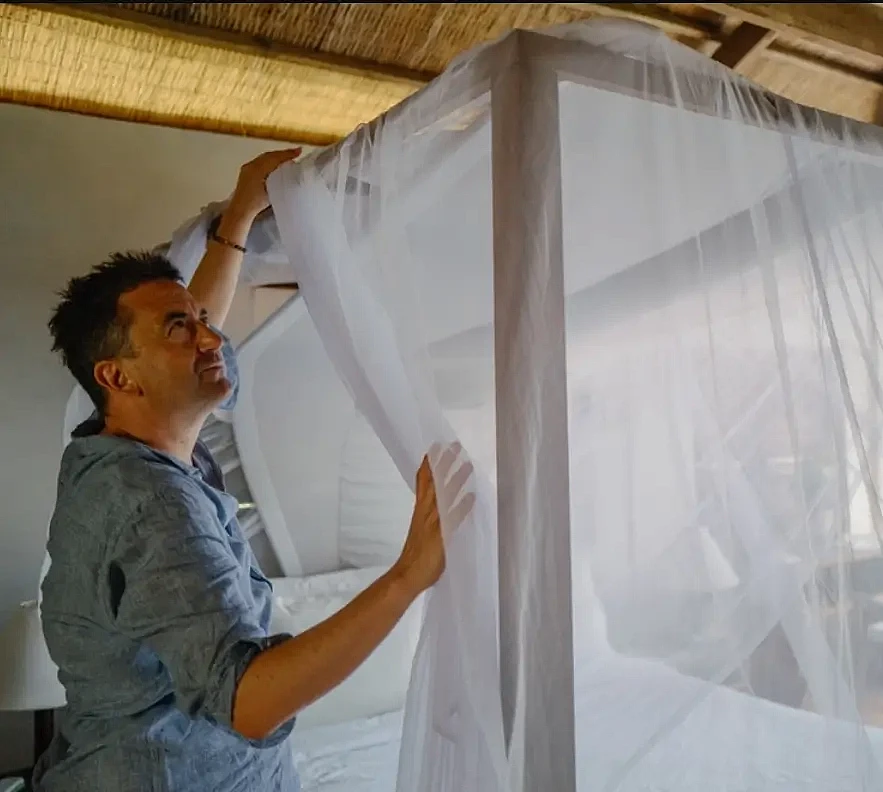
sleep under a mosquito net;
in the evening and at night, wear light-colored, loose-fitting clothing with long sleeves and long pants, as light colors are less attractive to mosquitoes;
use air conditioning and install mosquito screens on the windows and doors of your living quarters.
Chemoprophylaxis involves taking antimalarial medication. You should begin the course one to two weeks before your trip, continue taking it throughout your stay in the affected area, and finish the course one to four weeks after leaving the risk zone (the exact duration depends on the specific medication). The appropriate drug and dosage regimen should be determined by an infectious disease specialist or a general practitioner, taking into account your travel itinerary, your overall health, and any potential contraindications.
Medications do not offer a 100% guarantee, but they significantly reduce the risk of contracting the disease and prevent the development of severe, life-threatening forms of malaria.
Malaria vaccines
A major breakthrough has been the World Health Organization’s (WHO) approval of the first-ever malaria vaccines. They have proven effective in preventing malaria caused by *Plasmodium falciparum* in children living in regions with a high risk of the disease—primarily in African countries.
For travelers, these vaccines are not yet a standard preventive measure. They are primarily used for mass vaccination campaigns in countries where the infection is constantly circulating.
When traveling to exotic destinations, remember that experiencing a new culture and climate should be a pleasant memory, not a struggle against illness. Proper preparation makes malaria preventable, ensuring your journey remains a truly safe adventure.
1. Articulating ethical principles guiding Target Malaria's engagement strategy
2. Extracellular Vesicles in Malaria: Shedding Light on Pathogenic Depths
3. Overview of Plasmodium spp. and Animal Models in Malaria Research
4. ANIMAL MODELS OF MALARIA-ASSOCIATED ACUTE KIDNEY INJURY