
Psoriasis and COVID 19
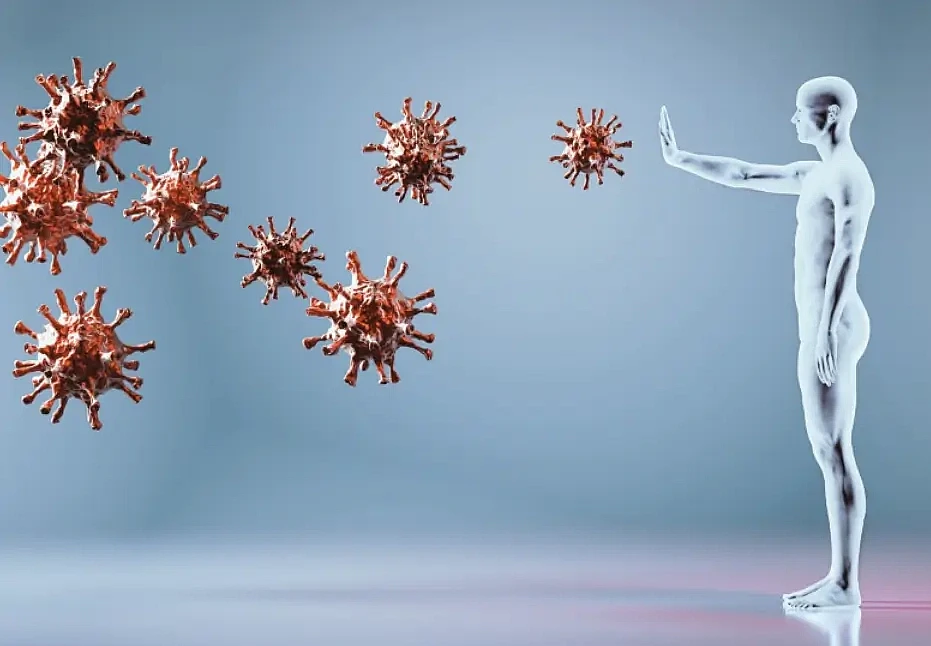
There is indeed a relationship between psoriasis and COVID-19, and it is bilateral: both psoriasis can affect susceptibility to the virus, and the infection itself can change the course of skin disease. Let's figure out how.
How Psoriasis Affects the Risk of COVID-19
Studies show that patients with psoriasis are indeed somewhat more likely to contract coronavirus infection. However, in this group, the disease is usually milder, less often requiring hospitalization and death.
Why is this happening?
Scientists suggest that it is a matter of general genetic and immune mechanisms. The expression of proteins that enhance the IL-17 (IL-17) signaling pathway is increased in cells affected by SARS-CoV-2. And this cytokine plays a key role in the pathogenesis of psoriasis. Thus, the immune response to the virus activates the same inflammatory pathways as in psoriasis but in the opposite direction.
How COVID-19 affects the course of psoriasis
Here, the picture is more complex and ambiguous. On the one hand, the very fact of having been infected can provoke an exacerbation of the skin process. On the other hand, the exacerbation itself may be associated with treatment of COVID-19.
Promising drug repurposing approach targeted for cytokine storm implicated in SARS-CoV-2 complications
Possible mechanisms of exacerbation:
Systemic inflammation and cytokine storm. In severe COVID-19, there is an excess production of pro-inflammatory cytokines (TNF-α, IL-1, IL-6, IL-17), which can "spur" the inflammatory process in psoriasis.
Effects of drugs. Some drugs that have been used to treat COVID-19 (such as hydroxychloroquine) may themselves cause exacerbations of psoriasis.
Stress and general exhaustion. Surviving infection, anxiety, and restriction of activity and daily schedule can themselves be a trigger for skin deterioration.
Clinical manifestations:
In many patients, there is an increase in the area of skin lesions, increased infiltration and erythema (redness) of plaques after COVID-19.
It has been described cases when, after infection, psoriasis debuted for the first time, guttate rashes appeared, and localized plaque psoriasis transformed into more severe forms - generalized pustular psoriasis or psoriatic erythroderma.
Post-COVID psoriatic arthritis may also worsen.
What is important to know about treatment
Doctors took into account several key points when managing patients with psoriasis during the COVID-19 pandemic:
Continuation of psoriasis therapy. In most cases, patients were advised not to interrupt systemic therapy (biological drugs, methotrexate, etc.) during infection.
Caution with glucocorticoids. Long-term use of systemic steroids in the acute phase of COVID-19 may have worsened outcomes, but in some cases (e.g., when oxygen therapy was needed) they were vital and were not reversed.
Vaccination. Psoriasis patients should be vaccinated against COVID-19 as it is not contraindicated during psoriasis therapy.
What to do if psoriasis worsened after COVID-19
If you notice a deterioration of the skin after the illness, be sure to inform your dermatologist about it. The doctor can help adjust the treatment, and drugs may need to be added to control the skin.
Thus, the relationship between psoriasis and COVID-19 is a complex complex complex of interactions, where infection can both provoke exacerbation and be the result of immune shifts. The main thing is not to engage in self-treatment, but to act under the supervision of a specialist.
1.Immunity after COVID‐19 vaccination in people with higher risk of compromised immune status: a scoping review
2. Immunotherapeutic approaches to curtail COVID-19
3. A study of the efficacy and safety of plaque psoriasis treatment by TNF‐α and IL‐17A inhibitor biologics in patients who received the inactivated SARS‐CoV‐2 vaccine
4. Increasing host cellular receptor—angiotensin‐converting enzyme 2 expression by coronavirus may facilitate 2019‐nCoV (or SARS‐CoV‐2) infection