
Psoriasis
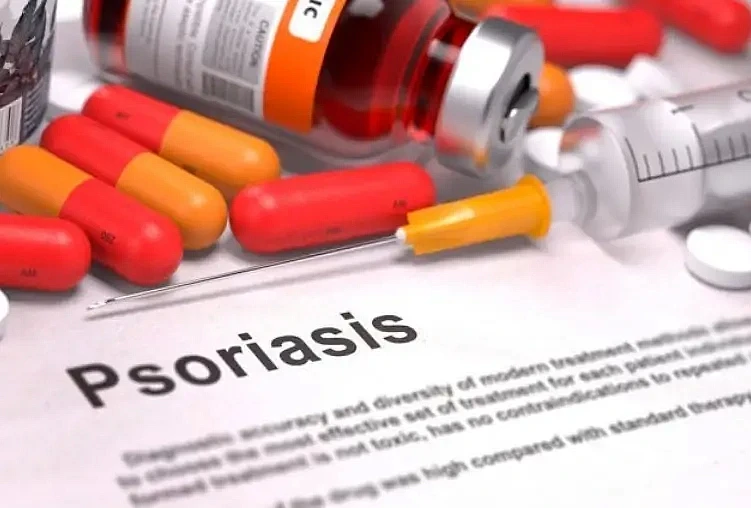
Psoriasis is a mysterious disease, the causes of which are still unknown. What is the danger of psoriasis for other organs and systems and how modern medicine offers to treat it?
Psoriasis is an unpleasant skin disease in which the body becomes covered with red rashes and they merge into spots. The person may be anxious with itching that keeps them awake, and if arthritis complications occur, severe joint pain may be bothersome. Psoriasis significantly affects quality of life. Studies show that people feel as bad as people who have had a heart attack, heart failure, or severe hypertension.
Unfortunately, doctors still have not found the answer to the question of how to cure psoriasis. Everything offered by the pharmaceutical industry and medicine - ointments, creams, ultraviolet light, and drugs for immunity - brings only temporary relief. Other measures, such as psychotherapy, vitamin supplementation, and diet for psoriasis, do not cure but help improve the condition.
Psoriasis head
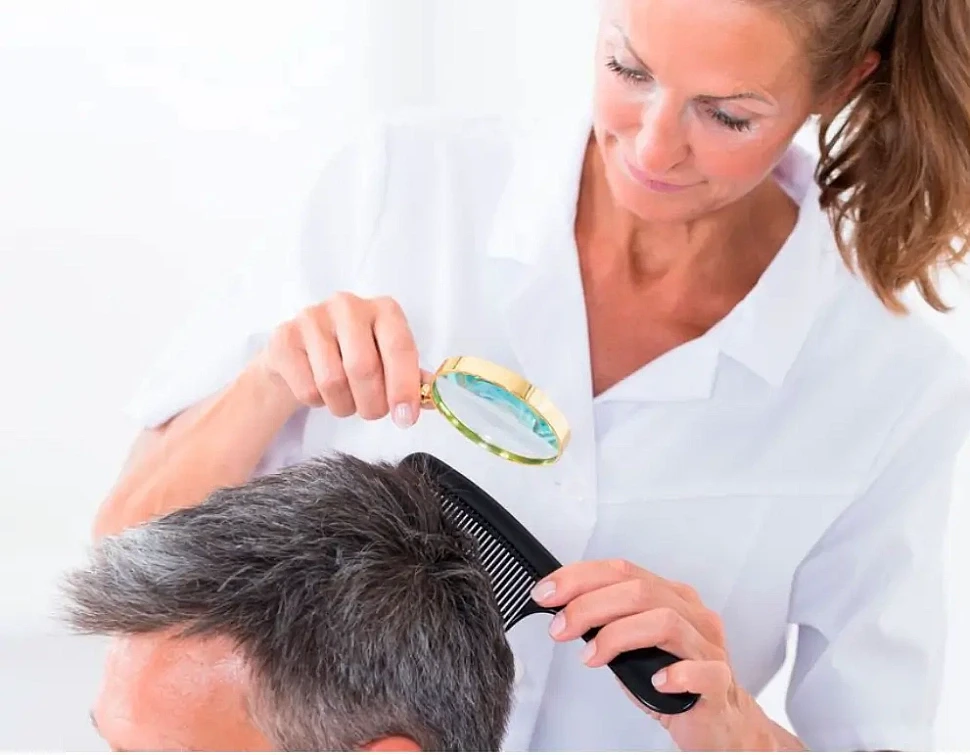
Psoriasis on the head is quite common. The plaques are located in the hairy part, on the forehead, around the ears. The disease may be limited to the scalp only, but most often it is only the starting site for the spread of plaques throughout the body. How does psoriasis of the head?
The first pockets appear in the form of peeling on the back of the neck.
The scaling then spreads further, itching and itching the skin. In the early stages of psoriasis, patients tend to think they have just dandruff and are looking hard for a cure. Medical attention is often fruitless - dermatologists may mistake foci for seborrheic dermatitis and prescribe shampoos for it.
In the next stage, itching becomes intolerable, the patient injures the skin with combs to the blood.
Next, red plaques and bumps appear, which the person easily injures when combing.
The plaques grow into gray particles that gradually cover the entire scalp. Particles are surface-sloughed epithelium.
Psoriasis then spreads to the smooth scalp that is not covered by the hair.
Treatment consists of hormonal drugs taken by mouth and applied topically. Itching and inflammation of the scalp can be quickly eliminated. General strengthening and soothing drugs allow you to lift the immune system and have a sedative effect. Topical treatments are used to eliminate psoriatic plaques. They can be hormonal (creams, ointments) and contain no hormones. Shampoos, masks and balms based on zinc, birch tar, salicylic acid are successfully used.
In addition to drugs and ointments, patients are sometimes prescribed physioprocedures - ultraviolet light and laser treatment of the skin.
Symptoms of Psoriasis in Adults
Symptoms of psoriasis are so distinctive that the diagnosis can be made accurately and quickly. The main manifestation of the disease is red scaly patches (plaques) on the surface of the skin, consisting of papules. Patients are concerned about intense itching and signs of inflammation in the area of the spots. One of the characteristic features of psoriasis is the spread of plaques where there are skin lesions - micro-injuries, scratches, cracks. The preferred sites of rashes are on the scalp under the hair, on the extensor surfaces of the joints, on the lower back and sacrum, and in all natural skin folds. Occasionally, the disorder affects the nail plate, which may thicken or, conversely, thicken, become stained, grooved, and pitted.
Psoriasis is characterized by a wave-like course, in which periods of exacerbation are spontaneously followed by remission. Many people notice that they cannot link an event in their life to an outbreak. During this period, the symptoms of psoriasis are most pronounced - scaling increases, the redness of the spots becomes obviously bright, as a result of the flaking of the skin and the introduction of infection, purulence of plaques is possible.
Depending on the time at which the disease is exacerbated, its forms are distinguished - winter, summer, regardless of the seasons. Patients suffer most from the winter form, the symptoms of which subside under the influence of summer sunbathing. In summer, the disease is worsened by natural ultraviolet light.
Forms of psoriasis
There is no generally accepted classification of psoriasis. It is distinguished by the following forms:
- Plaque (ordinary).
- Exudative.
- Arthropathic.
- Pustular.
- Psoriatic erythroderma.
- Psoriasis of the scalp.
- Psoriasis folds.
- Psoriasis of palms and soles.
- Different clinical cases may occur in the same patient.
The International Classification of Diseases of the Tenth Revision (ICD-10) is used for statistics and classification in medicine. According to him, there are 8 types of psoriasis:
Psoriasis vulgaris - this includes the most common species (coin-shaped and plaque psoriasis).
Generalized pustular psoriasis includes impetigo herpetiformis and Zumbush disease. Both forms are characterized by a pustular rash that has spread throughout the body.
Acrodermatitis continua (Allopo) is a specific type of pustular lesion that first extends to the fingers and hands, and then to the whole body.
Psoriasis ointment
Psoriasis ointment is a remedy similar in composition and action to the cream. In contrast, ointment is less absorbed into the skin and may leave greasy traces. Due to slow absorption, the ointment lasts longer and can be used under a bandage. The effect of the ointment is that the top layer of the skin (epidermis) softens and better understands drugs. Like creams, ointments are hormonal and non-hormonal:
Hormones contain hormones, from the weakest to the strongest drugs of the 4th generation. Ointments are prescribed by a doctor and can be withdrawn by gradually reducing the dosage.
Non-hormonal ointment from psoriasis moisturizes the skin, relieves inflammation and itching, heals wounds - it does everything that hormonal, but the effect is achieved after a few days (and sometimes weeks) of application. Thus, they are given as supportive care rather than as prompt treatment during an acute exacerbation.

Diet for psoriasis
Diet in psoriasis should be healthy and complete in composition and calorie content. When the disease is in the stage of exacerbation, allergenic foods - oranges, tangerines, lemons, eggs, milk, red vegetables and fruits - should be excluded from the diet. Throughout the time it is necessary to limit spicy, fat, smoked and sweet, seasonings and spices. Do not abuse strong, boiled broths of meat, fish and mushrooms. Salt the food should be moderately. Alcoholic beverages are not excluded altogether, but people should minimize drinking.
Relief days may help if the disorder progresses. Limiting carbohydrates in the diet can also help.
What allows and even welcomes the diet in psoriasis?
Fiber.
It allows to improve metabolic processes, as well as to normalize the function of digestion.
Calcium is a widely recognized useful product with a pronounced anti-inflammatory and anti-allergic effect, and therefore its presence in the diet is necessary: cottage cheese, dairy and fermented milk products are mandatory for the patient.
Polyunsaturated fatty acids are needed in order to normalize fat metabolism, help the assimilation of many vitamins, improve the condition of the skin and vascular walls.
Zinc must be present in the diet to promote the synthesis of immunity-boosting protein.
At any stage of psoriasis, foods rich in antioxidants should be eaten. What are these substances? Antioxidants neutralize free radicals in the body, promote vascular strengthening and participate in the production of connective tissue elements. Also, patients need vitamins B, which have a beneficial effect on the nervous system and improve the condition of the skin.
![Daivonex (calcipotriol | calcipotriene) [Dovonex] ointment](https://shopmybuy.com/wa-data/public/photos/47/04/447/447.970.webp "Daivonex (calcipotriol | calcipotriene) [Dovonex] ointment")