
Seborrheic Dermatitis in Children: Causes and Treatment
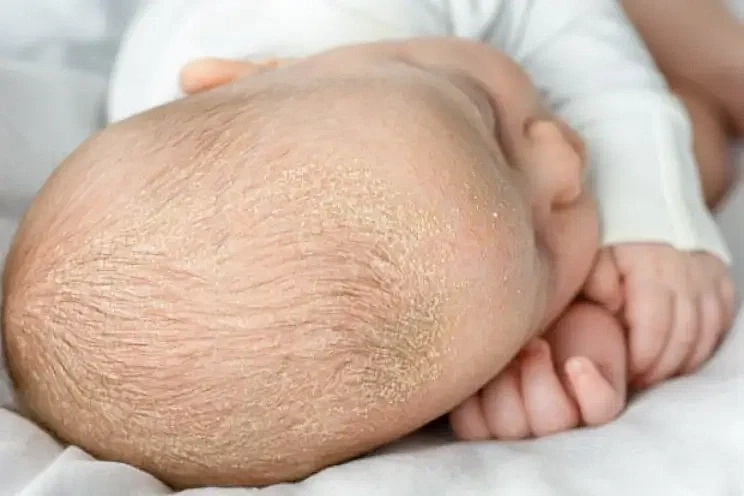
Any rash on the baby's skin is disturbing. The appearance of dermatitis on the head of a child is no exception, although due to hair they can hide from attention for a long time. It is particularly disturbing when strange crusts and manifestations occur in the youngest. Studies have shown that seborrheic dermatitis in childhood most often occurs in the first months of a child's life and then during adolescence. We tell you what this disease is, what are the reasons for fungal attacks on the scalp and how seborrheic dermatitis is treated
Perpetrator of seborrheic dermatitis: Malassezia fungus
Unlike, for example, the complicated mechanisms that cause psoriasis (which can be confused with seborrheic dermatitis on a child's head), the causes of seborrheic dermatitis themselves are well known. It is caused by the yeast-like fungus Malassezia.
This mushroom lives quietly on people's skin, usually without causing any particular problems. It is part of a healthy skin microflora. But if it has a chance to reproduce vigorously, it will immediately exploit it. And especially Malassezia loves greasy secretions of the scalp.
Although it is the fungus that causes the disease, the cause (as US scientists proved in 2019) is not in its presence, but in the violation of the body's defenses, which are caused by a variety of factors.
Seborrheic dermatitis on the head of a child can be caused by:
The imperfection of protective functions of the skin - as in the smallest. Mothers call seborrheic dermatitis in children "milk crusts";
Inappropriate diet;
Viral infections and other causes of decreased immunity;
Increased sweating - for example, if the baby is too shuffled, if the child is actively engaged in sports, when moving to another climate zone, with teenage hormonal changes;
Lack of hygiene procedures.
Symptoms and treatment of seborrheic dermatitis in children
The fungi secrete compounds that irritate the scalp, causing a sensation of itching, burning. It is worth knowing that such "crusts" can form not only under the hair, but also on smooth skin. The most common location in toddlers is behind the ears, which are usually wetter.
Doctors diagnose seborrheic dermatitis in children after examining the enlarged skin. What will the doctor see in such an illness?
In the first stage, the disease manifests with a bright red spot.
Further on it begins to appear large yellowish scales, rather sticky and difficult to separate from the skin.
When seborrheic dermatitis is diagnosed, treatment, drugs, and care products are selected depending on the age of the child.
If it is "milk crusts" in the baby, it is recommended to check the hypoallergenicity of care products, do not overheat the child, wash your hair more often and wait. And do not try to comb or peel away the crusts: so damaged the skin! Normally, everything passes on its own, but if the situation worsens, then you need to see a doctor.
If the child is older, they start by finding out the causes, monitoring body hygiene, and following a diet. Experts have proved that an abundance of fermented milk products, vegetables and fruits reduces the number of exacerbations of seborrheic dermatitis, but coffee, fast food, soda, fatty, fried food, canned and semi-finished products increase.
If the situation does not improve, for the treatment of seborrheic dermatitis, the doctor may prescribe drugs for external use with zinc, anti-inflammatory effect, antifungal shampoo, topical glucocorticosteroids, etc.
Severe itching is an indication for antihistamine therapy. Attaching secondary infection due to scratching requires the prescription of antiseptics and antibacterial formulations.
1.Scalp seborrheic dermatitis demonstrates a skewing of Th1 activation: a proteomic study in lesional skin
2. The dual roles of T cells and keratinocytes in seborrheic dermatitis: a narrative review
3. Dynamic Thiol/Disulfide Balance in Patients with Seborrheic Dermatitis: A Case–Control Study
4. Efficacy of Roflumilast Foam, 0.3%, in Patients With Seborrheic Dermatitis
5. High Staphylococcus epidermidis Colonization and Impaired Permeability Barrier in Facial Seborrheic Dermatitis