
Who Can Benefit From Melatonin?

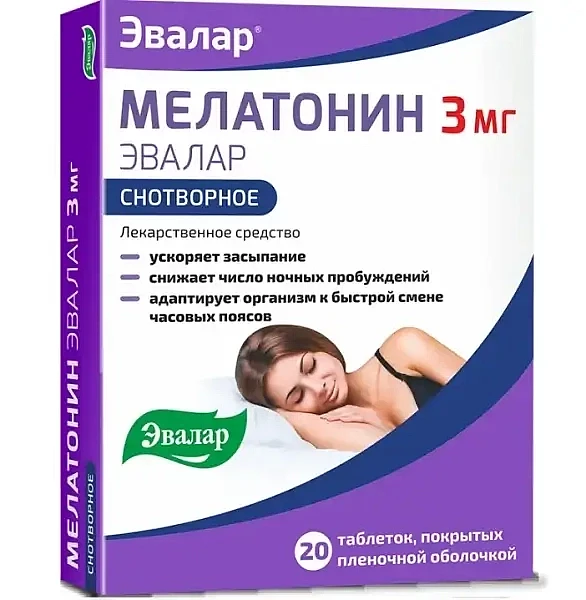
Melatonin is a hormone often called a sleep hormone. Melatonin is synthesized in the body, mainly in the epiphysis (pineal gland) of the brain. Its production is tightly subject to circadian rhythms: in the dark, synthesis increases sharply, peaks between about 2 and 4 a.m., and at dawn is suppressed by the light that the retina perceives.
The main task of melatonin is to synchronize the internal biological clock of the body with the external light cycle. It signals the body that night has come and initiates processes that help prepare for sleep: body temperature and blood pressure decrease slightly, metabolism slows down
When melatonin helps
When circadian rhythms are disturbed. For example, when jetlag (a sudden change in time zones) or shift work, melatonin helps to "synchronize" the internal clock. It may also be useful for delayed sleep phase disorder (when people have difficulty lying down early and cannot sleep for a long time).
In some older people. As people age, production of melatonin itself decreases, so taking additional pills sometimes improves sleep quality. But there is a nuance here: in older people, insomnia often has other, more complex causes (somatic diseases, taking drugs), so melatonin is usually considered as an adjunct, rather than a panacea.
In some concomitant conditions. There is evidence that melatonin may improve sleep in people with certain neuropsychiatric disorders (eg, ASD, some forms of depression, delirium). There are also positive examples in children with developmental delays and sleep disturbances.
Sometimes in healthy people. A brief period of time may shorten the time to fall asleep. Treatment of primary insomnia with melatonin: a double-blind, placebo-controlled, crossover study

When Most Likely Will Not Help
If insomnia is caused by other factors - stress, anxiety, depression, chronic pain, diseases of the internal organs - melatonin, most likely, will not solve the problem. In such cases, the root cause must be sought and addressed, rather than simply "pouring in" the hormone. Disorders of the sleep-wake cycle in adults.
Important nuances
The effect is often limited. Studies suggest that melatonin may slightly decrease the amount of time it takes to fall asleep, but its effects on overall sleep duration and depth are usually not as significant.
You should not appoint yourself. Even if the reason seems clear, it is better to discuss the appointment with a doctor (somnologist, neurologist). The specialist will help to understand whether there are real indications, choose the right dosage and duration of the course, as well as exclude contraindications (for example, autoimmune diseases, liver or severe kidney failure, pregnancy, lactation).
There are risks. In addition to the individual reaction, there may be side effects when taking: drowsiness during the day, headache, dizziness, sometimes anxiety or unusual dreams.
Psychological Dependence. There is a risk of "hooking" on the drug psychologically: if you do not take the pill, the person begins to worry, and this in itself
So the myth is not that melatonin is a miracle remedy, but that it is often tried indiscriminately in any insomnia. If you have trouble sleeping, it is better to start with a visit to a specialist: he will help to understand the reasons and choose an adequate strategy.
--------------------------------------------------------------------------
1. Melatonin for insomnia
2. Melatonin in Clinical Practice: Grey Zones Between Chronobiology, Insomnia and Consumer Supplementation
3. The Efficacy of Melatonergic Receptor Agonists Used in Clinical Practice in Insomnia Treatment: Melatonin, Tasimelteon, Ramelteon, Agomelatine, and Selected Herbs
4 Therapeutic role of melatonin in migraine prophylaxis