
Psoriasis and Tattoos: What You Need to Know
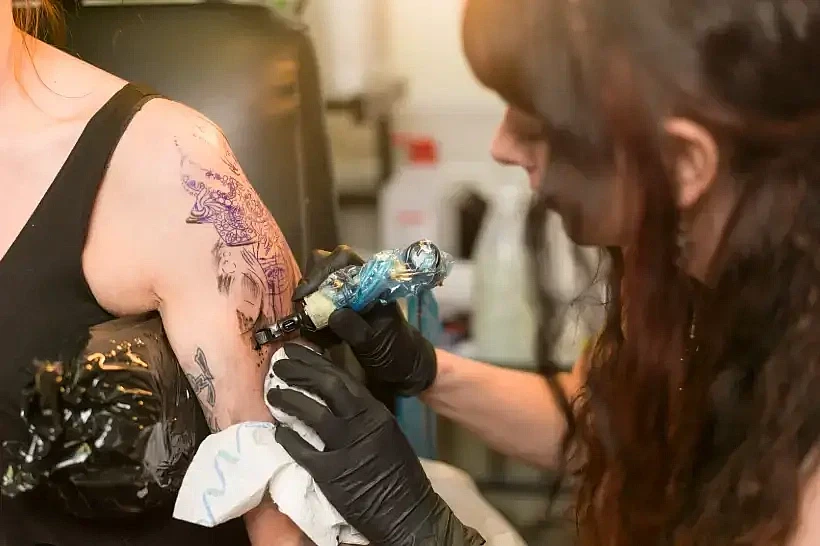
The main reason why people with psoriasis are often discouraged from getting tattoos is due to the so-called Köbner phenomenon (also called an isomorphic reaction). The bottom line is that any mechanical injury to the skin—and tattooing involves thousands of micropunctures can trigger the appearance of new psoriatic plaques at or near the injury site.
This is not a hypothesis: studies suggest that about one-quarter of patients with psoriasis are affected, and those treated with corticosteroid drugs are even more at risk. Moreover, the reaction does not always appear immediately: the interval between the procedure and the appearance of new rashes can be from several days to two years.
There are other factors that heighten risks:
Skin sensitivity. In psoriasis, the skin is generally reactive. Even if there are no visible plaques at the time of the procedure in the place of the future tattoo, the procedure itself is a stress for the skin, which can trigger an exacerbation.
Ink Composition. Tattoo ink contains various chemical components (aluminum, metal oxides, etc.). In a person with psoriasis, the immune system is already prone to an excessive response, and the introduction of foreign pigment can further trigger the inflammatory process.
Stage of the disease. It is absolutely not necessary to go to the tattoo parlor during an active exacerbation: the risk of complications and deterioration in this case is maximum.
The area affected. If large areas of skin are affected by psoriasis, large-scale tattooing increases the overall trauma of the procedure.
Drug therapy. If people take immunosuppressive or biologic drugs, this may slow healing and increase the risk of infection after the procedure.
At the same time, it is important to understand that not all people with psoriasis Köbner's phenomenon works - in many people the procedure goes without consequences. But there is a risk, and that is why most dermatologists advise caution.

What Doctors Say
Given these risks, most dermatologists advise patients with psoriasis not to get tattoos.
If the decision is made, doctors recommend:
Apply the tattoo only during remission, when symptoms are minimal or absent.
Avoid areas of skin previously affected by psoriasis or prone to rashes.
Select small-area drawings to minimize the area that is injured.
Carefully observe post-procedural care: use moisturizers and anti-inflammatory agents approved by a dermatologist, protect the tattoo from the sun and mechanical damage.
Important! Even with all precautions taken, the risk of an exacerbation cannot be completely excluded. Therefore, be sure to consult your dermatologist before the procedure. It will assess the condition of the skin, the stage of the disease and give individual recommendations.